

How to Choose the Right Motorcycle Brake Hose for Different Riding Conditions
Choosing the right motorcycle brake hose is an important part of maintaining a reliable hydraulic braking system. Different motorcycles have different requirements for hose length, fitting configuration, operating pressure, temperature resistance, and material construction. A suitable brake hose must meet the motorcycle manufacturer's specifications while providing the required durability for its intended application.
For motorcycle parts distributors, importers, repair workshops, aftermarket brands, and OEM buyers, understanding the differences between rubber brake hoses, PTFE brake hoses, and reinforced braided brake lines can help simplify product selection and reduce fitment problems.
This guide explains how to choose motorcycle brake hoses for different riding conditions, what technical specifications to check before purchasing, and how customized motorcycle brake lines can support different models and aftermarket applications.
1. Why Motorcycle Brake Hose Selection Matters
A motorcycle brake hose transfers hydraulic pressure from the brake master cylinder to the caliper. Its construction, dimensions, fittings, and compatibility with brake fluid all contribute to the proper operation of the braking system.
Selecting an unsuitable hose may result in installation difficulties, incorrect routing, leakage, or failure to meet the system's operating requirements. A hose that fits physically is not necessarily suitable for hydraulic brake service.
1.1 Operating Pressure and Hose Construction
Motorcycle braking systems operate under hydraulic pressure that changes during braking. The selected hose assembly must be designed and tested for the required working pressure and other specified operating conditions.
Reinforced brake hoses use additional structural layers to help withstand internal pressure. Depending on the design, reinforcement may also help control hose expansion. Buyers should evaluate documented performance specifications rather than assuming that every reinforced hose offers the same characteristics.
1.2 Temperature and Environmental Exposure
Motorcycle brake hoses may be exposed to engine heat, sunlight, rain, humidity, dust, road debris, and cleaning products. These conditions vary according to the motorcycle design and operating environment.
When selecting a motorcycle brake hose, check the specified temperature range, material compatibility, outer protection, and resistance to the expected environmental conditions. The complete assembly must remain suitable for the intended application throughout its specified service conditions.
1.3 Fitment and Installation Requirements
Correct fitment is essential for both standard and modified motorcycles. Hose length, fitting angle, thread specification, connection type, and routing must match the application.
For modified motorcycles with different handlebars, forks, or brake components, a custom-length assembly may be necessary. The finished hose must provide adequate clearance throughout steering and suspension movement without twisting, stretching, or contacting sharp edges.
2. Comparing Different Motorcycle Brake Hose Materials
Motorcycle brake hoses are available in different constructions. Each material has specific properties, and the correct choice depends on the design requirements of the braking system rather than price or appearance alone.
2.1 Rubber Brake Hose
Rubber brake hoses are widely used in motorcycle hydraulic braking systems. Their suitability depends on the rubber compound, reinforcement structure, dimensions, and the requirements of the intended vehicle.
Key Selection Considerations
- Compatibility with the specified brake fluid.
- Required working pressure and temperature range.
- Resistance to aging and environmental exposure.
- Correct hose dimensions and end-fitting configuration.
- Compliance with applicable vehicle and market requirements.
A properly specified Rubber Brake Hose Assembly can be appropriate for motorcycles designed to use that construction. For replacement projects, buyers should verify the original specifications and ensure that the replacement assembly meets the same applicable requirements.
2.2 Teflon and PTFE Brake Hose
PTFE, commonly associated with the trade name Teflon, is used as an inner-tube material in certain hydraulic hose designs. A PTFE brake hose assembly may include reinforcement and an outer protective layer, depending on the product specification.
PTFE-based constructions are considered for applications requiring suitable chemical compatibility and performance under defined operating conditions. However, the properties of the complete assembly depend on the inner tube, reinforcement, fittings, manufacturing process, and testing.
What Buyers Should Check
- PTFE inner-tube specifications and dimensions.
- Reinforcement type and construction quality.
- Verified working pressure and temperature limits.
- Brake fluid compatibility and fitting security.
- Product testing and intended vehicle application.
A Teflon Brake Hose or PTFE Brake Line Assembly should be selected only when the complete product meets the requirements of the intended motorcycle braking system.
2.3 Stainless Steel Braided Brake Lines
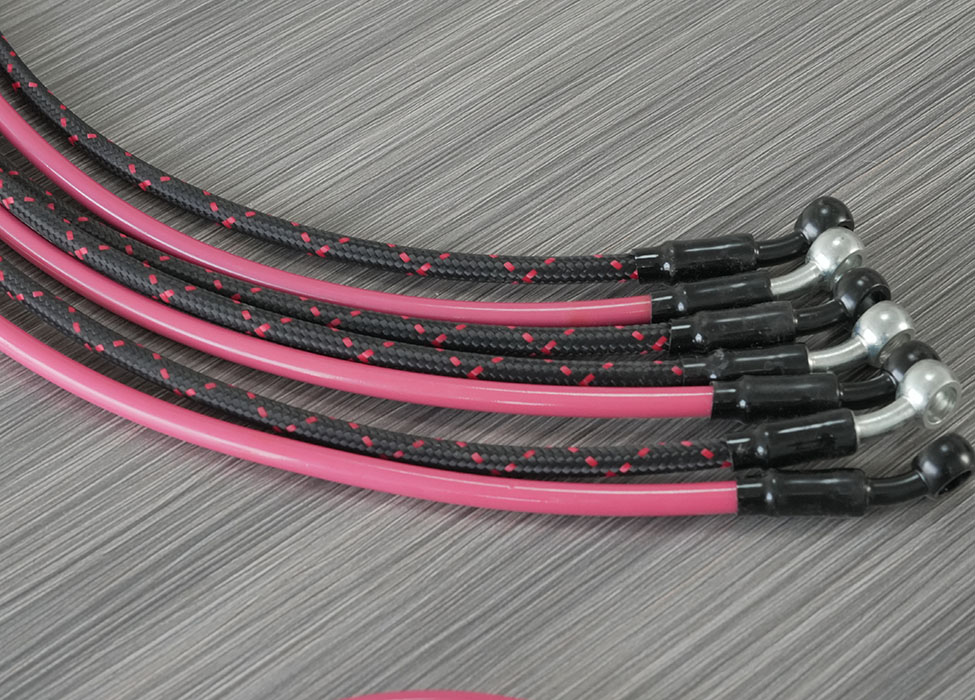
Stainless steel braided brake hoses incorporate a metallic braid around an inner hose structure. The braid can provide mechanical reinforcement and help protect the hose against certain types of external damage when the assembly is properly designed.
These products are often considered for aftermarket motorcycles, customized brake systems, and applications where a particular reinforced construction is required.
Potential Advantages
- Reinforcement designed to help control hose expansion.
- Additional mechanical protection in suitable configurations.
- Options for different fitting angles and hose lengths.
- Compatibility with selected aftermarket brake system designs.
Not all braided brake hoses have identical performance. Buyers should verify the braid construction, fitting materials, corrosion protection, pressure performance, and suitability for the target motorcycle.
2.4 Nylon Tubing and Brake System Applications
Nylon tubing is used in a variety of automotive, industrial, and fluid-transfer applications. However, ordinary nylon tubing is not automatically suitable for hydraulic motorcycle brake systems.
Before considering Nylon Brake Hose or Nylon Brake Hose Assembly products, confirm that the specific product is expressly designed, tested, and approved for the intended braking application. General-purpose nylon tubing must not replace a qualified hydraulic brake hose simply because the diameter appears correct.
3. How Riding Conditions Affect Brake Hose Selection
Different riding environments create different demands on motorcycle components. Brake hose selection should account for the vehicle design, specified operating conditions, environmental exposure, and maintenance requirements.
3.1 Daily Commuting and Urban Riding
Commuter motorcycles frequently operate in stop-and-go traffic. Repeated braking, engine heat, road contamination, and daily environmental exposure make regular inspection important.
For these motorcycles, buyers should prioritize a correctly specified hose assembly, dependable fittings, suitable outer protection, and compatibility with the original braking system. An aftermarket upgrade should not compromise the motorcycle's approved configuration or installation requirements.
3.2 Long-Distance Touring
Touring motorcycles may experience extended operating periods, changing weather, luggage loads, and varying road conditions. Before long-distance use, inspect the complete brake hose assembly for damage, leakage, abrasion, and incorrect routing.
Replacement hoses should match the motorcycle's technical requirements and provide adequate clearance during steering and suspension movement. Any suspected braking system fault should be corrected before the journey.
3.3 Sport and Performance Motorcycles
Sport motorcycles may place different demands on braking components because of their design, riding style, and braking system configuration. Some compatible applications use reinforced brake hoses to help manage expansion under pressure.
When selecting upgraded Motorcycle Brake Lines, compare documented pressure performance, construction, fitting quality, temperature limits, and compatibility with the motorcycle. A reinforced hose cannot compensate for worn pads, contaminated brake fluid, damaged calipers, or other braking system faults.
3.4 Off-Road Motorcycles and ATVs
Off-road motorcycles and all-terrain vehicles may encounter mud, stones, dust, vibration, water, and frequent suspension movement. These conditions make hose routing and external protection particularly important.
Check that the hose is designed for the intended vehicle and operating environment. Confirm that it does not rub against the tire, suspension, frame, or other moving parts. The assembly must maintain appropriate clearance throughout the specified range of movement.
3.5 Hot, Humid, and Coastal Environments
Motorcycles used in hot or humid regions may experience high ambient temperatures, moisture, and exposure to corrosive contaminants. These factors can affect hose materials and metal fittings over time.
For distributors serving Southeast Asia, the Middle East, Africa, Japan, and South Korea, product selection should reflect the intended market and vehicle application. Check material specifications, fitting finishes, protective coverings, maintenance requirements, and relevant environmental test results where applicable.
4. How to Choose the Correct Motorcycle Brake Hose Specifications
Before ordering replacement or customized brake hoses, collect accurate vehicle and component information. This is particularly important for importers, aftermarket brands, wholesalers, and OEM purchasing teams sourcing products for multiple motorcycle models.
4.1 Measure the Required Hose Length
Hose length must be determined according to the vehicle's original routing or an approved modified configuration. Measurements should account for the path between connection points rather than simply using the straight-line distance.
After installation, the hose must not become stretched at full steering lock or interfere with suspension movement. Excessive length can also cause rubbing or contact with nearby components.
4.2 Confirm Fitting Types and Thread Specifications
Brake hose assemblies may use different fitting angles, thread sizes, connection designs, and sealing methods. A fitting that looks similar may still be incompatible with the motorcycle's brake components.
Information to Confirm Before Ordering
- Fitting thread diameter and pitch.
- Connection and sealing type.
- Fitting angle and orientation.
- Hose internal and external dimensions.
- Required assembly length and routing.
- Compatibility with the master cylinder and caliper.
4.3 Verify Pressure and Temperature Ratings
Choose a brake hose assembly with documented ratings appropriate for the intended application. Working pressure, proof testing, burst performance, temperature limits, and other relevant requirements should be evaluated according to the applicable product specifications and standards.
Do not assume that two hoses with similar dimensions or materials have equivalent pressure performance. Request the relevant technical documentation from the supplier when sourcing products for commercial distribution.
4.4 Confirm Brake Fluid Compatibility
The hose's inner material, seals, and other wetted components must be compatible with the brake fluid specified by the motorcycle manufacturer. Incorrect material selection may cause deterioration or compromise system operation.
Always follow the vehicle manufacturer's requirements for brake fluid type and maintenance procedures.
5. Advantages of Customized Motorcycle Brake Lines for B2B Buyers
For motorcycle parts importers, wholesalers, repair networks, and aftermarket brands, customized brake line assemblies can help address different vehicle fitment requirements and product portfolio needs.
5.1 Custom Length and Fitting Configurations
Different motorcycle models may require different hose lengths, fitting angles, and connection specifications. A manufacturer with suitable engineering and production capabilities can develop assemblies according to confirmed technical drawings, samples, or vehicle-specific requirements.
Accurate specifications and fitment verification are essential. Customization should never bypass required pressure testing, compatibility checks, or applicable safety requirements.
5.2 Material and Appearance Options
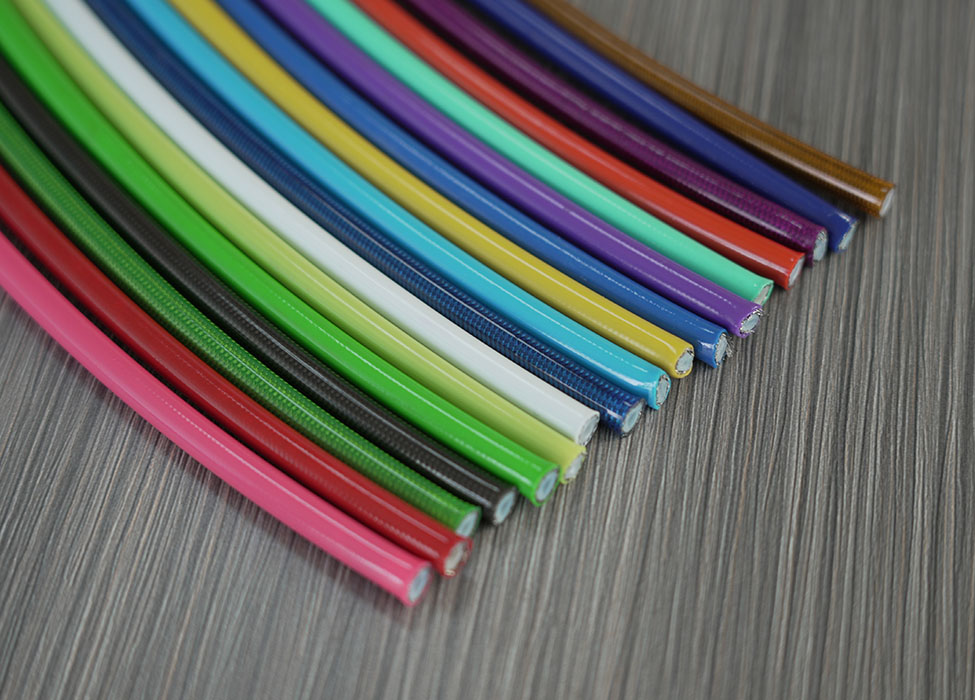
Depending on the product design, buyers may request different hose constructions, protective coverings, fitting finishes, or exterior colors. These options can support product differentiation for aftermarket brands and distributors.
However, visual customization must not compromise the hose's structural integrity, temperature resistance, fluid compatibility, or other required performance characteristics.
5.3 Consistent Production and Quality Control
For bulk orders, consistent dimensions and assembly quality help reduce fitment issues and improve inventory management. Buyers should evaluate the manufacturer's incoming material inspection, crimping controls, dimensional checks, pressure testing, final inspection, and product traceability procedures.
5.4 OEM and Private-Label Supply
OEM and private-label projects may require customized packaging, product identification, technical documentation, and repeatable manufacturing specifications. Confirm these requirements before production begins.
For distributors supplying several markets, a clearly documented product specification can also make purchasing, quality evaluation, and repeat ordering more efficient.
6. Common Mistakes to Avoid When Buying Motorcycle Brake Hoses
6.1 Choosing by Appearance Alone
A colorful outer covering or stainless steel braid does not prove that a hose meets the required braking performance. Confirm technical specifications, testing records, and application compatibility before purchasing.
6.2 Ignoring Fitting Compatibility
Incorrect threads, fitting angles, or sealing methods may cause installation problems or leakage. Always verify the complete connection specification instead of relying on visual similarity.
6.3 Using General-Purpose Tubing for Hydraulic Brakes
Products intended for pneumatic systems, fuel transfer, or general fluid applications may not be suitable for hydraulic braking. Use only a hose assembly specifically designed and qualified for the intended brake system.
6.4 Overlooking Installation and Maintenance
Even a correctly specified brake hose can become unsafe if installed incorrectly. Follow the vehicle manufacturer's procedures for routing, tightening, brake fluid filling, bleeding, and final inspection.
7. Frequently Asked Questions About Motorcycle Brake Hose Selection
What is the best material for a motorcycle brake hose?
There is no single best material for every motorcycle. Rubber and reinforced PTFE constructions have different characteristics. The correct choice depends on the original specifications, pressure and temperature requirements, brake fluid compatibility, and intended application.
Are stainless steel braided brake lines suitable for all motorcycles?
No. A braided brake line must be specifically compatible with the motorcycle's braking system. Verify the hose dimensions, fittings, pressure ratings, routing, and applicable approval requirements before installation.
Can customized brake hoses be made for modified motorcycles?
Yes, provided the assembly is designed for the intended application and manufactured to the required specifications. Accurate measurements, compatible fittings, appropriate materials, testing, and professional installation are essential.
What information should importers provide when requesting a quotation?
Useful information includes the motorcycle make and model, model year, required hose length, fitting specifications, material requirements, order quantity, packaging requirements, destination market, and any relevant technical drawings or samples.
How can buyers evaluate a motorcycle brake hose supplier?
Review the supplier's manufacturing processes, material specifications, testing procedures, quality control, customization capability, traceability, and ability to provide documentation relevant to the target application and market.
8. Conclusion: Select Motorcycle Brake Hoses Based on Application and Quality
Choosing the right motorcycle brake hose requires more than comparing price, color, or exterior construction. Material compatibility, pressure performance, temperature limits, fitting accuracy, hose length, routing, and manufacturing quality all influence whether an assembly is suitable for a particular motorcycle.
For motorcycle parts distributors, OEM buyers, and aftermarket brands, a reliable sourcing process begins with accurate specifications and documented quality requirements. Rubber brake hoses, reinforced PTFE brake lines, and other specialized assemblies should always be evaluated according to their intended applications.
When developing a motorcycle brake hose product range, work with suppliers who can support technical specification checks, consistent manufacturing, suitable testing, and application-specific customization. This approach helps reduce fitment problems and supports reliable aftermarket product supply.