

How to Choose the Right Brake Hose Fittings for Motorcycle Brake Line Assemblies
Choosing the correct brake hose fittings is an essential part of manufacturing and upgrading motorcycle brake line assemblies. Even when a brake hose has the correct length and material, an incompatible fitting can cause installation difficulties, leakage, or problems with system operation. For motorcycle parts distributors, repair workshops, aftermarket brands, and OEM buyers, understanding fitting types and compatibility helps reduce installation errors and improve product reliability.
A customized motorcycle brake line assembly typically consists of a pressure-rated hose, end fittings, sealing components where required, and a connection design matched to the intended braking system. Selecting the right combination requires attention to thread specifications, fitting angles, hose construction, operating requirements, and installation space.
1. Why Brake Hose Fittings Matter
Brake hose fittings connect the flexible brake hose to components such as the master cylinder, brake caliper, or other designated hydraulic connections. They must be compatible with the mating component and suitable for the intended brake fluid, pressure, temperature, and service environment.
1.1 Connection Compatibility
Different motorcycles and braking systems may use different thread standards, sealing methods, and fitting configurations. A fitting that appears similar to the original part is not necessarily interchangeable. Buyers should confirm the exact thread diameter, pitch, seat type, sealing arrangement, and required fitting orientation before ordering replacement or customized brake lines.
1.2 Leakage Prevention and Secure Installation
Correctly matched fittings and sealing components help establish a secure hydraulic connection. Incorrect threads, damaged sealing surfaces, unsuitable washers, or improper installation can lead to leakage and unsafe braking conditions. All connections should be assembled and inspected according to the relevant component manufacturer's instructions.
1.3 Routing and Installation Space
Motorcycle brake lines must follow a suitable route without excessive bending, twisting, stretching, or contact with moving parts. Straight, angled, and other fitting configurations may be available depending on the product design. The correct configuration can make installation easier while helping maintain suitable hose routing throughout steering and suspension movement.
2. Common Brake Hose Fitting Types and Design Considerations
2.1 Banjo Fittings
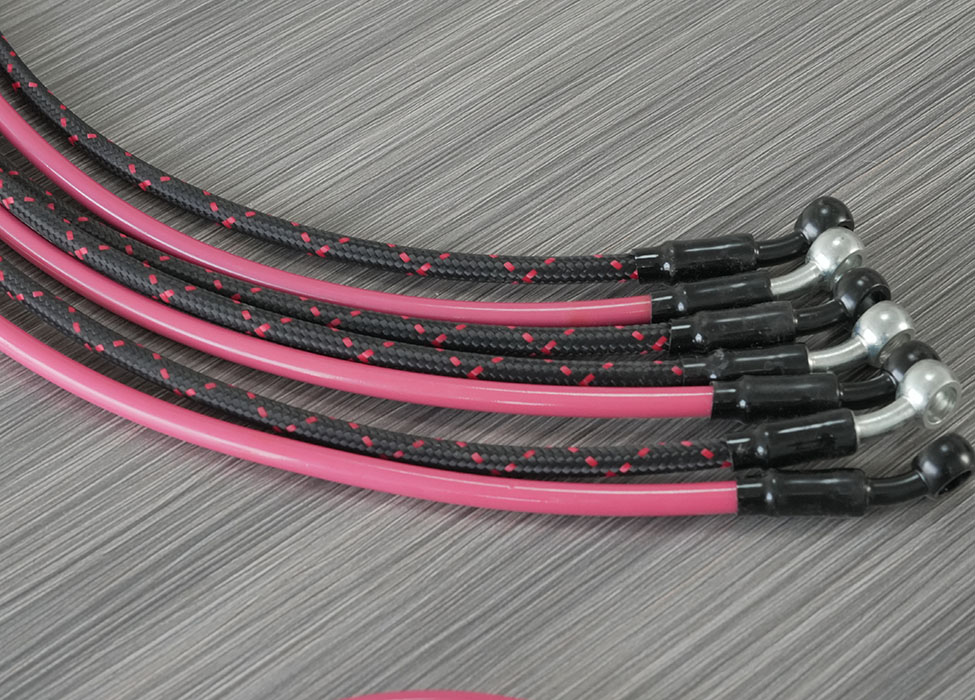
Banjo fittings are commonly found in motorcycle hydraulic brake systems. Their design can allow a compact connection where space is limited. However, the banjo bolt specification, fitting dimensions, sealing surfaces, and mounting orientation must match the brake component.
What Buyers Should Confirm
- Banjo bolt thread diameter and pitch
- Fitting thickness and connection geometry
- Required sealing washers and sealing surface condition
- Available clearance around the master cylinder or caliper
2.2 Straight and Angled Hose Ends
Straight and angled hose ends can support different installation layouts. The appropriate option depends on the location of the connection, available space, hose routing, and the required orientation after installation. An unsuitable angle may cause the hose to twist or come into contact with surrounding components.
2.3 Threaded and Specialized Connections
Some brake line assemblies use threaded connections or specialized fitting designs. Thread appearance alone is not enough to establish compatibility. Metric and other thread standards can differ in pitch, sealing design, and dimensions, so specifications should be verified rather than estimated from visual inspection.
3. How Hose Material Affects Brake Line Assembly Selection
Fittings cannot be selected independently of the hose construction. The hose, reinforcement, liner, end fittings, and assembly method must work together as a complete component designed for the intended hydraulic braking application.
3.1 Teflon Brake Hose and PTFE Brake Line Assembly
A Teflon Brake Hose commonly refers to a hose using a PTFE liner. PTFE is valued for its chemical resistance and suitability for applications where the complete hose design meets the required operating conditions. A PTFE Brake Line Assembly combines the hose with compatible end fittings and an assembly process appropriate for the specific product design.
When sourcing these products, buyers should confirm the liner specification, reinforcement construction, fitting compatibility, assembly requirements, and application approval. The name of the liner material alone does not establish the pressure rating or suitability of the complete brake line.
3.2 Stainless Steel Braided Brake Lines
Stainless steel braided brake lines use metallic reinforcement around an inner hose structure. When properly designed and manufactured, the reinforcement can help control hose expansion under pressure and support consistent brake lever feel. The actual performance depends on the full construction, dimensions, fittings, and quality of the finished assembly.
For aftermarket motorcycle brake lines, buyers should pay attention to braid quality, end-fitting security, protective covering where applicable, and compatibility with the intended motorcycle model.
3.3 Rubber Brake Hose Assembly
A Rubber Brake Hose Assembly can be suitable for applications designed around an approved rubber hose construction. Buyers should evaluate the specified pressure capability, fluid compatibility, temperature range, dimensions, and fitting design rather than choosing a product based on material name alone.
3.4 Nylon Brake Hose and Nylon Brake Hose Assembly
Nylon tubing is used in many fluid and pneumatic applications, but general-purpose nylon tubing should not automatically be treated as a hydraulic brake hose. A Nylon Brake Hose or Nylon Brake Hose Assembly should only be selected for a braking application when the complete product has been specifically designed, tested, and approved for that intended use.
Before purchasing, confirm the manufacturer's application specifications and supporting test information. Material identification by itself is not proof that a tube is suitable for a vehicle's hydraulic braking system.
4. A Practical Checklist for Motorcycle Brake Line Buyers
Before placing a bulk order or requesting a customized brake line assembly, purchasing teams can use the following checklist to reduce specification errors.
4.1 Confirm the Application
- Motorcycle model, year, and braking system configuration
- Front brake, rear brake, or a complete line set
- Original equipment replacement or aftermarket modification
- Intended installation environment and operating requirements
4.2 Confirm Dimensions and Fittings
- Required hose length and measurement method
- Thread diameter, pitch, and sealing arrangement
- Fitting type, angle, orientation, and material
- Required protective sleeve, covering, or routing accessories
- Connection compatibility with the intended master cylinder and caliper
4.3 Request Product and Quality Information
- Hose construction and material specifications
- Assembly and crimping process requirements
- Applicable pressure, leakage, and durability test information
- Inspection procedures and traceability requirements, where applicable
- Samples or drawings for specification confirmation before mass production
5. Advantages of Customized Motorcycle Brake Lines
For aftermarket brands, wholesalers, importers, and motorcycle parts distributors, customized Motorcycle Brake Lines can offer more flexibility than selecting a standard assembly without checking application details. Customization should be based on verified dimensions and the requirements of the intended braking system.
5.1 Application-Specific Length and Fitting Configuration
Customized assemblies can be produced to specified lengths and fitting configurations, helping buyers serve different motorcycle models and aftermarket installation requirements. Accurate drawings, samples, or verified measurements help minimize specification misunderstandings.
5.2 Material and Appearance Options
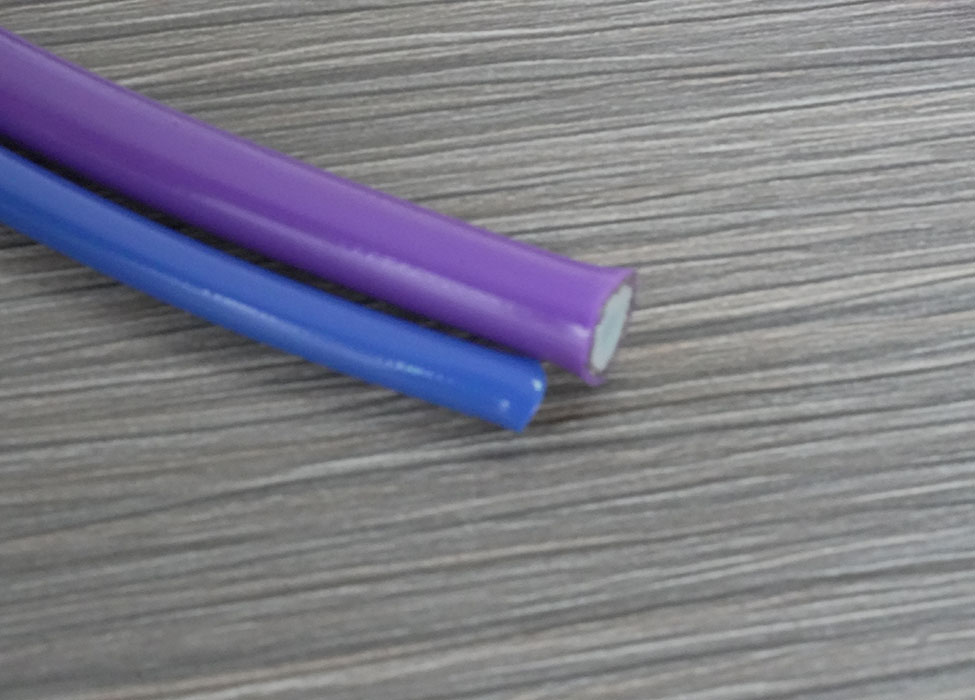
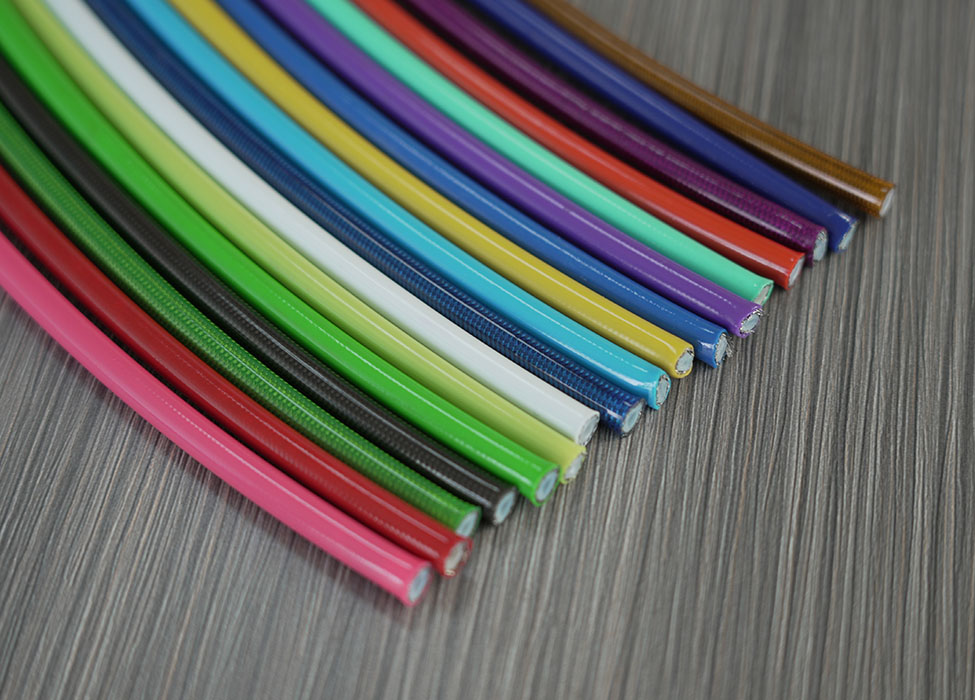
Depending on the product range, buyers may be able to specify different hose constructions, reinforcement styles, protective coverings, and external colors. These options can help aftermarket brands organize product lines and maintain a consistent appearance across their catalogs. All selected materials and finishes must remain suitable for the intended application.
5.3 OEM and Wholesale Supply
OEM and wholesale buyers often need consistent specifications, repeatable assembly quality, and reliable communication during product development. A manufacturer with defined production procedures, fitting options, assembly controls, and inspection records can help purchasing teams manage customized orders more effectively.
6. Quality Control for Brake Hose Fittings and Assemblies
Because brake lines are safety-critical components, quality control should cover the complete assembly rather than only the hose or fitting individually. Appropriate inspection and testing depend on the product design, applicable requirements, and intended application.
6.1 Incoming Material and Component Inspection
Manufacturers should verify incoming hose materials, fittings, and relevant components against approved specifications. Dimensional checks and visual inspection can help identify incorrect threads, surface damage, dimensional variation, or other issues before assembly.
6.2 Assembly Process Control
Hose preparation, fitting insertion, crimping or other specified connection processes, and final dimensions should follow controlled manufacturing procedures. Incorrect assembly parameters can affect connection integrity, so production settings should be validated for the specific hose and fitting combination.
6.3 Final Inspection and Testing
Depending on the design and applicable requirements, final quality checks may include dimensional inspection, connection verification, leakage testing, pressure testing, and other validated tests. Test methods and acceptance criteria should be defined for the actual product rather than assumed to be identical for every brake line assembly.
7. How to Source Brake Hose Assemblies from a Manufacturer
When evaluating a brake hose manufacturer, B2B buyers should look beyond the unit price. Product consistency, technical communication, customization capability, and quality documentation can all affect the total cost and reliability of a supply arrangement.
7.1 Prepare a Clear Product Specification
Provide the intended application, hose length, hose construction, fitting drawings or samples, connection specifications, required quantity, packaging requirements, and any applicable market requirements. Complete information makes it easier for a manufacturer to evaluate feasibility and prepare an accurate quotation.
7.2 Confirm Sample Approval Before Mass Production
For customized Motorcycle Brake Lines, a pre-production sample or approved drawing can help confirm fitting orientation, overall length, routing, and connection compatibility. Any changes to the approved specification should be reviewed before production continues.
7.3 Evaluate Long-Term Supply Capability
Importers and distributors should assess production capacity, quality management, lead-time communication, packaging, and the manufacturer's ability to maintain consistent specifications across repeat orders. These factors are particularly important when supplying multiple motorcycle models or building an aftermarket product range.
8. Frequently Asked Questions About Motorcycle Brake Hose Fittings
What should I check before ordering a motorcycle brake hose assembly?
Confirm the motorcycle application, hose length, fitting type, thread specifications, sealing method, hose construction, and required performance specifications. Do not rely on appearance alone to establish compatibility.
Can I reuse the original brake hose fittings?
Reuse depends on the fitting design, condition, manufacturer instructions, and approved assembly method. Some fittings are designed for a particular assembly process and should not be reused or re-crimped. Follow the component manufacturer's instructions and applicable service requirements.
Are PTFE brake lines suitable for every motorcycle?
Not automatically. A PTFE brake line assembly must have suitable dimensions, reinforcement, fittings, pressure capability, and application compatibility. Verify that the complete assembly is appropriate for the specific motorcycle and braking system.
What information should I send when requesting an OEM quotation?
Send the application details, drawings or samples, required hose length, fitting specifications, material requirements, order quantity, packaging details, and relevant quality requirements. If any specification is unknown, ask the manufacturer to help identify what needs to be confirmed before production.
Conclusion
Selecting the right brake hose fittings is a key step in producing a reliable motorcycle brake line assembly. Correct thread specifications, sealing surfaces, fitting angles, hose construction, and controlled assembly procedures all contribute to product suitability and installation quality.
For motorcycle parts importers, wholesalers, aftermarket brands, and OEM purchasing teams, working with a capable brake hose manufacturer can simplify customization and specification management. Whether sourcing a Teflon Brake Hose, PTFE Brake Line Assembly, Rubber Brake Hose Assembly, or application-approved nylon-based product, always verify the complete assembly against the requirements of the intended braking system.