

How to Extend the Service Life of Stainless Steel Braided Brake Lines
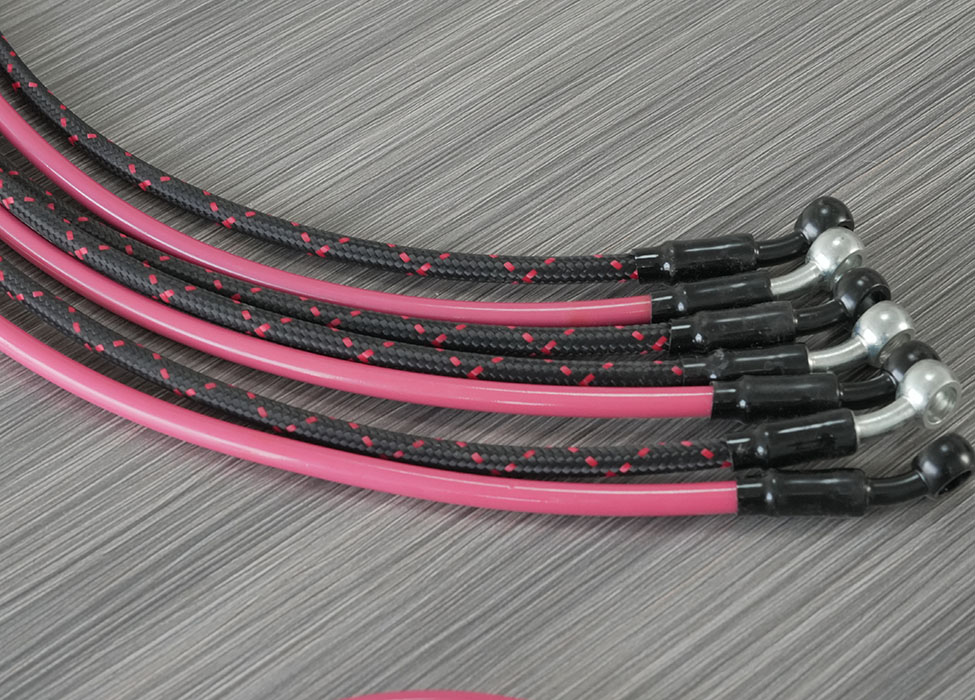
Stainless steel braided brake lines are commonly selected for motorcycles, modified vehicles and performance brake systems because the reinforced construction offers a different balance of pressure control, durability and brake feel compared with many conventional rubber hose designs.
But even a high-quality brake line can suffer premature wear if it is incorrectly routed, exposed to excessive movement or installed with the wrong fittings.
For motorcycle manufacturers, aftermarket distributors and brake component buyers, understanding the factors that affect brake hose service life is useful when selecting products for different markets.
What Determines the Service Life of a Brake Hose?
Material and Hose Construction
The inner tube material, reinforcement layer, outer protection and fitting construction all contribute to the overall performance of a brake hose assembly.
PTFE brake hoses are commonly considered for applications requiring a chemically resistant inner tube and stable performance across demanding operating conditions.
For buyers looking for this type of construction, our Teflon Brake Hose is available for customized brake hose applications.
Installation and Routing
Incorrect routing is one of the most overlooked causes of brake hose damage.
A hose should not be pulled tight at full steering lock, compressed between components or positioned close to sharp edges. The correct routing should be checked throughout steering and suspension movement.
Environmental Conditions
Brake hoses used in Southeast Asia, coastal areas, the Middle East and Africa may experience very different combinations of heat, humidity, dust and road contamination.
For this reason, the same hose may require different inspection frequencies depending on where the vehicle operates.
Five Practical Ways to Extend Brake Hose Service Life
1. Keep the Hose Away From Sharp Edges
Continuous contact with a bracket, frame edge or other metal component can gradually damage the outer protection or braid.
During installation, leave enough clearance to prevent rubbing while maintaining secure routing.
2. Avoid Excessive Bending
A brake hose should follow a smooth curve rather than a sharp bend. Excessive bending close to the fitting can create unnecessary mechanical stress.
Why Fitting Areas Matter
The transition between the flexible hose and the fitting is a mechanically important area. Repeated movement, incorrect angle or excessive bending can place additional stress on this section.
3. Check Full Steering Movement
On motorcycles, never check only the straight-ahead position. Turn the handlebars completely left and right and observe the hose.
The hose should not become stretched, twisted, pinched or trapped.
4. Keep Brake Fluid and Contaminants Under Control
Brake fluid should be compatible with the complete brake system and hose construction. When servicing the system, prevent dirt and foreign material from entering open connections.
Any sign of fluid leakage around the hose or fittings should be investigated immediately.
5. Inspect After Brake System Modifications
Handlebar changes, suspension modifications, different calipers and other brake upgrades can change hose routing requirements.
A hose that was correctly routed on the original configuration may no longer have sufficient clearance after modification.
Choosing PTFE, Nylon or Rubber Brake Hose
Material selection should be based on the actual application rather than simply choosing the most expensive option.
PTFE Brake Hose
PTFE is widely used as an inner tube material in performance-oriented brake hose construction. It can be combined with reinforcement and suitable outer protection to create a complete brake hose for demanding applications.
Our PTFE Brake Line Assembly is designed for buyers requiring a complete PTFE brake hose assembly with application-specific fittings.
Nylon Brake Hose
Nylon constructions can be considered for applications where flexibility, weight and installation requirements are important.
Our Nylon Brake Hose provides another material option for OEM and aftermarket brake hose projects.
Rubber Brake Hose Assembly
Rubber remains an important material for many original-equipment and replacement applications. It can be an appropriate choice where the vehicle specification calls for a conventional rubber brake hose construction.
Our Rubber Brake Hose Assembly can be customized according to required application specifications.
How to Maintain Motorcycle Brake Lines in Daily Use
Monthly Visual Inspection
For frequently used motorcycles, a quick visual inspection can identify many obvious problems.
- Check the hose surface.
- Inspect the fittings.
- Look for leakage.
- Check the routing.
- Look for contact with moving components.
- Check for abnormal bends or deformation.
After Riding in Rain or Coastal Conditions
Water and road contaminants can accumulate around fittings and brackets. Cleaning the motorcycle and inspecting the brake hose after extended exposure to these conditions can help identify corrosion or mechanical damage earlier.
After a Motorcycle Modification
Whenever handlebars, forks, calipers or other brake components are changed, recheck the entire brake hose route. Do not assume that the original hose length or fitting orientation remains suitable.
Buying Checklist for International Brake Hose Buyers
Before Placing a Bulk Order
- Confirm the hose inner material.
- Confirm reinforcement construction.
- Confirm hose length.
- Confirm fitting type and thread specification.
- Confirm fitting angle and orientation.
- Confirm required color and outer protection.
- Confirm brake fluid compatibility.
- Confirm application and vehicle models.
- Confirm packaging requirements.
- Request samples before large-volume production when necessary.
For Motorcycle Parts Distributors
Distributors should also consider SKU management. Different motorcycle models may require different lengths and fitting combinations, so a clear product specification system can reduce ordering errors.
FAQ About Stainless Steel Braided Brake Lines
How long do stainless steel braided brake lines last?
There is no fixed service life for every application. Service life depends on construction, installation, environment, operating conditions and maintenance. Regular inspection is more useful than relying on a universal replacement period.
Do braided brake lines require special maintenance?
They do not normally require complicated maintenance, but regular visual inspection is important. The braid, fittings, routing and outer covering should be checked for damage or abnormal wear.
Can a damaged braided brake line be repaired?
Brake hose assemblies are safety-critical components. A hose with structural damage, leakage or damaged fittings should normally be replaced with a correctly specified assembly rather than treated as a cosmetic repair.
Are braided brake lines better than rubber brake hoses?
They serve different application requirements. A properly designed braided hose can offer controlled expansion characteristics and a different brake feel, while rubber hose assemblies remain widely used for OEM and general replacement applications.
Our Brake Hose Product Range
Our product range covers different hose materials and complete brake line assemblies for motorcycles, cars, modified vehicles and other hydraulic brake applications.
- Teflon Brake Hose
- Nylon Brake Hose
- PTFE Brake Line Assembly
- Nylon Brake Hose Assembly
- Rubber Brake Hose Assembly
- Motorcycle Brake Lines
Factory Direct Brake Hose Manufacturing
For wholesale, OEM and aftermarket projects, we can produce brake hose assemblies according to customer drawings, samples and technical specifications.
Depending on the project, customized options may include hose material, length, fitting configuration, fitting orientation, protective covering and other assembly requirements.
If you are sourcing brake hoses for motorcycles, distributors or aftermarket brake systems, please contact us with your required specifications.
Conclusion
The service life of a stainless steel braided brake line depends on much more than the stainless steel braid itself. Correct material selection, fitting quality, routing, installation and regular inspection all play a role.
For professional buyers, selecting the right brake hose construction for the intended vehicle and operating environment is the first step toward building a reliable supply chain.