

Common Motorcycle Brake Hose Problems and How to Fix Them
Motorcycle brake hoses are relatively small components, but they play an important role in the hydraulic braking system. Every time the brake lever or pedal is operated, the hose is exposed to hydraulic pressure, vibration, bending and temperature changes.
For motorcycles used daily, modified motorcycles, scooters and performance applications, brake hose condition should be checked regularly. Cracks, swelling, abrasion, leakage and incorrect routing can all affect the reliability of the braking system.
This guide covers the most common motorcycle brake hose problems, how to identify them, what usually causes them and when replacing the original hose with a properly specified aftermarket or braided brake line may make sense.
1. Motorcycle Brake Hose Leakage
What Does a Brake Hose Leak Look Like?
Brake fluid around a hose connection, fitting or damaged hose surface is one of the clearest signs that the hydraulic system requires inspection.
A leak may appear around the banjo fitting, sealing washer, hose-to-fitting connection or damaged section of the hose.
Common causes of brake hose leakage
- Damaged hose material
- Loose or incorrectly installed fittings
- Damaged sealing washers
- Corrosion around fittings
- Incorrect fitting specification
- Improper hose routing
- Mechanical damage or abrasion
How to Deal With a Leaking Brake Hose
Do not simply tighten the fitting without identifying the actual cause of the leak. Inspect the hose, fittings and sealing surfaces carefully.
If the hose itself is damaged, replacing the complete hose assembly is generally more appropriate than attempting to repair the damaged section.
After replacement, the hydraulic system should be properly bled and inspected for leakage before the motorcycle is returned to service.
2. Motorcycle Brake Hose Swelling or Bulging
Why Does a Brake Hose Swell?
A flexible hose can experience some dimensional change when hydraulic pressure is applied. Excessive or visible swelling, however, should not be ignored.
Hose construction, material condition, reinforcement and age can all influence how much a hose changes under pressure.
How to Check for Brake Hose Bulging
Inspect the entire length of the hose while applying the brake carefully. Look for localized expansion, deformation or unusual movement.
A hose that visibly changes shape or has developed a permanent bulge should be investigated before continued use.
Why braided brake lines are considered for modified motorcycles
Reinforced braided brake lines are designed to provide additional mechanical support around the inner hose. Compared with some conventional flexible hose constructions, the reinforcement can reduce hose expansion under pressure.
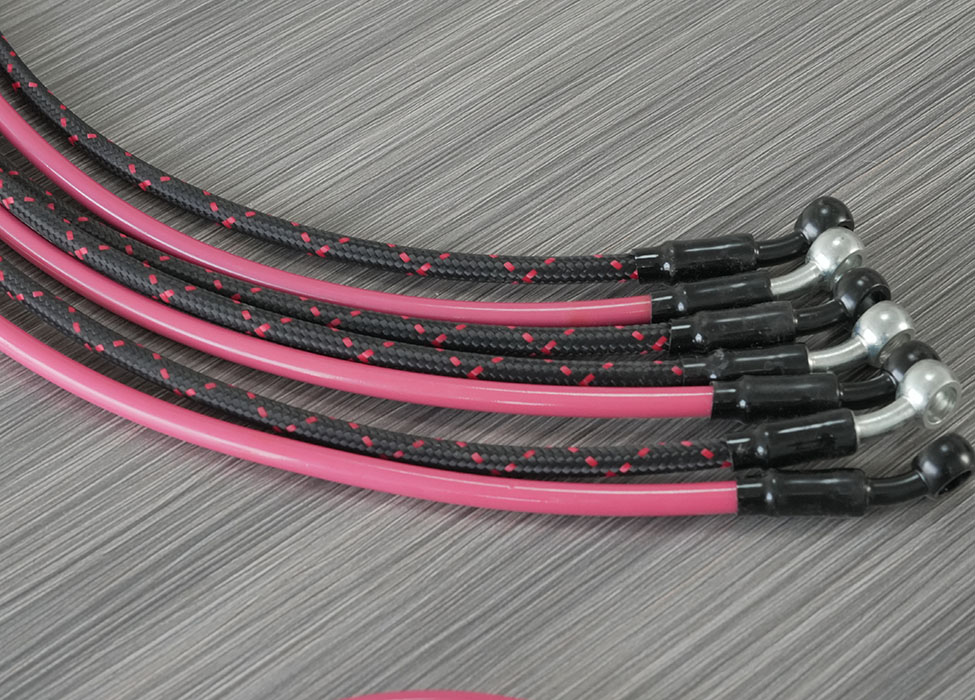
This is one reason Motorcycle Brake Lines with braided reinforcement are commonly considered for modified and performance-oriented motorcycle applications.
3. Brake Hose Cracking and Aging
Where Do Cracks Usually Appear?
Cracks may first appear in areas exposed to repeated bending, heat, sunlight, chemicals or mechanical contact.
Pay particular attention to sections close to fittings, bends and hose guides.
What Should You Do If the Hose Is Cracked?
A cracked brake hose should not be treated as a cosmetic issue. The hose should be inspected and replaced when its structural condition is compromised.
For conventional replacement applications, a properly specified Rubber Brake Hose Assembly may be suitable.
For modified motorcycle applications, customers may instead consider a reinforced hose construction based on the required pressure, temperature, flexibility and fitting configuration.
4. Brake Hose Abrasion and Rubbing
Why Does Brake Hose Abrasion Happen?
Brake hose routing can change after replacing handlebars, forks, calipers or other motorcycle components. A hose that originally had sufficient clearance may start touching the frame, fork, wheel, tire or another moving component.
Continuous rubbing can gradually damage the outer surface.
Areas that should be inspected
- Front fork area
- Steering head
- Wheel and tire clearance
- Brake caliper connection
- Handlebar movement area
- Frame brackets
- Areas close to the exhaust system
How to Correct Hose Routing
Check the hose with the handlebars turned fully left and right. The hose should not become stretched, kinked or trapped.
On motorcycles with suspension movement, clearance should also be checked throughout the expected range of movement.
5. Brake Hose Kinking or Excessive Bending
A brake hose should follow a smooth routing path. Sharp bends or forced positioning can place additional stress on the hose and fittings.
Common reasons for hose kinking
- Incorrect hose length
- Incorrect fitting angle
- Improper installation
- Modified handlebars
- Aftermarket calipers
- Incorrect hose routing
For customized motorcycle brake line projects, hose length and fitting angle should be specified together. Changing only the hose length without checking the fitting orientation can create installation problems.
6. Spongy Motorcycle Brake Lever
Does a Spongy Brake Lever Always Mean a Bad Hose?
No. A soft or spongy brake lever can have several causes, including air in the hydraulic system, old brake fluid, caliper problems, master cylinder issues or other mechanical faults.
When a brake hose has been replaced or the hydraulic system has been opened, air may enter the system and proper bleeding becomes necessary. Haynes also notes that bleeding is required after a hose or hydraulic connection is replaced. :contentReference[oaicite:2]{index=2}
What Should Be Checked?
- Brake fluid level
- Brake fluid condition
- Air in the hydraulic system
- Hose condition
- Fitting connections
- Master cylinder operation
- Caliper condition
A brake hose should therefore be diagnosed as part of the complete hydraulic braking system rather than being blamed automatically for every change in brake lever feel.
7. Corrosion Around Motorcycle Brake Hose Fittings
Why Is Corrosion More Common in Some Environments?
Motorcycles operating in humid, coastal or rainy environments can experience greater exposure to moisture and road contamination.
This is particularly relevant for motorcycles used in tropical Southeast Asia, coastal areas of the Middle East, Japan, Korea and parts of Africa.
What Should Buyers Check?
Inspect the fitting surface, connection points and exposed metal components. If corrosion has affected the fitting or sealing area, the assembly should be assessed before continued use.
8. Choosing the Right Replacement Brake Hose
Teflon Brake Hose
A Teflon Brake Hose uses PTFE as the inner tube material. PTFE is commonly selected where chemical resistance and temperature capability are important considerations.
Nylon Brake Hose
A Nylon Brake Hose can be considered for applications requiring a lightweight and flexible hose construction, provided the material and complete assembly meet the application requirements.
PTFE Brake Line Assembly
A PTFE Brake Line Assembly combines the hose with the required fittings and connection configuration, making it suitable for customers looking for a complete assembly rather than loose hose material.
How to Prevent Common Motorcycle Brake Hose Problems
Inspect the Hose During Routine Maintenance
Look along the entire hose for cracks, cuts, swelling, abrasion, pinching and fluid residue. A quick visual inspection can identify problems before they become more serious.
Check the Routing After Modifications
Any change to handlebars, forks, calipers or suspension components should be followed by a brake hose routing inspection.
Use the Correct Brake Fluid
Always use brake fluid that is compatible with the motorcycle braking system and follow the manufacturer's recommendations.
Do Not Ignore Small Leaks
A small amount of brake fluid around a fitting should not be treated as normal. Identify the cause and correct it before the motorcycle is returned to service.
Frequently Asked Questions About Motorcycle Brake Hose Problems
How often should a motorcycle brake hose be replaced?
There is no single replacement interval that applies to every motorcycle. Hose age, material, operating environment and physical condition should all be considered together with the motorcycle manufacturer's service recommendations.
Is a swollen motorcycle brake hose dangerous?
Visible swelling or bulging indicates that the hose should be inspected. If the hose has structural damage or abnormal deformation, replacement should be considered before continued operation.
Do braided brake lines make a motorcycle safer?
A properly specified braided brake line can provide greater resistance to hose expansion than some conventional hose constructions. However, overall braking safety depends on the complete braking system and correct installation.
Can one brake hose fit all motorcycles?
No. Motorcycle brake hoses differ in length, fitting type, thread specification, angle and routing. A replacement hose should be matched to the specific application.
When should I replace a rubber brake hose with a braided brake line?
An upgrade may be considered when a motorcycle is modified, when the original hose requires replacement, or when a customer requires a different hose construction. The replacement should always be selected according to the technical requirements of the motorcycle.
Need a Custom Motorcycle Brake Hose?
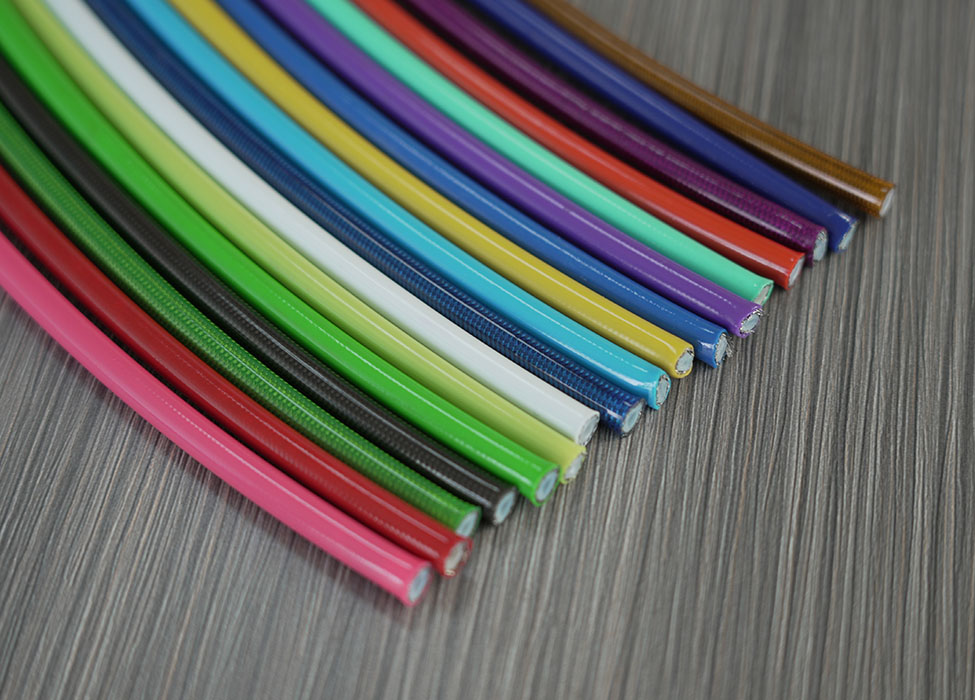
For OEM, replacement and modified motorcycle applications, we can manufacture brake hose assemblies according to hose length, fitting configuration, angle, color and other technical requirements.
Customers can provide a drawing, sample or product specification for evaluation.
Contact our brake hose factory for custom motorcycle brake hose solutions.