

Motorcycle Brake Hose Troubleshooting Guide: Causes, Inspection and Solutions
Brake hose problems are not always obvious. A motorcycle may still have braking force even when the hose has begun to deteriorate, rub against another component or develop a connection problem.
For motorcycle workshops, distributors and parts buyers, understanding the relationship between brake hose condition, hydraulic pressure, fittings and routing makes troubleshooting much easier.
This technical guide covers common motorcycle brake hose symptoms and practical inspection methods, with a focus on replacement and upgraded brake line applications.
Brake Hose Problem 1: Brake Fluid Is Found Around the Fitting
Possible Causes
- Damaged sealing washer
- Incorrect fitting installation
- Incorrect thread specification
- Damaged fitting
- Improper crimping
- Damaged hose near the fitting
Recommended Inspection
Clean the connection area and inspect it carefully. Check whether the fluid is coming from the hose body, fitting connection or sealing surface.
Do not assume that tightening the connection will solve every leak. Excessive tightening can damage threads or components.
For OEM and aftermarket brake hose buyers
Fitting quality and crimping consistency should be considered when selecting a brake hose supplier. A hose assembly is only as reliable as its complete construction.
Brake Hose Problem 2: The Brake Lever Feels Soft
Possible Causes
- Air inside the hydraulic system
- Old or contaminated brake fluid
- Brake hose expansion
- Leakage
- Master cylinder problems
- Caliper problems
Do not immediately replace the brake hose without checking the complete hydraulic system.
If the hydraulic system has been opened, bleeding may be required to remove air. This is a standard part of brake hose replacement and hydraulic brake maintenance. :contentReference[oaicite:3]{index=3}
When Can a Braided Brake Line Help?
A reinforced braided brake line can provide greater resistance to hose expansion compared with some conventional hose designs. This can contribute to a more controlled lever response when the rest of the braking system is operating correctly.
For performance-oriented applications, a correctly specified Motorcycle Brake Line can therefore be considered as part of a broader braking system upgrade.
Brake Hose Problem 3: The Hose Is Rubbing Against the Fork or Wheel
Why Does This Happen?
Hose routing can change after a motorcycle has been modified. A different handlebar, fork, caliper or suspension component may alter the original hose path.
The hose may then contact the fork, wheel, tire or frame during steering or suspension movement.
How to Check It
Turn the handlebars fully from left to right and observe the hose. Check whether the hose becomes stretched, pinched or excessively bent.
Also check clearance from the wheel and tire.
Solution
If the existing hose length or fitting orientation is unsuitable, a custom brake hose may be a better solution than forcing the original hose into a new routing position.
Brake Hose Problem 4: The Hose Is Swollen
What Causes Hose Swelling?
Hose behavior under pressure depends on its construction, material, reinforcement and condition.
Visible swelling or bulging should be treated as a warning sign requiring further inspection.
Possible Solution
Replace the damaged hose with a correctly specified brake hose assembly.
For applications requiring a PTFE inner tube, a Teflon Brake Hose can be considered.
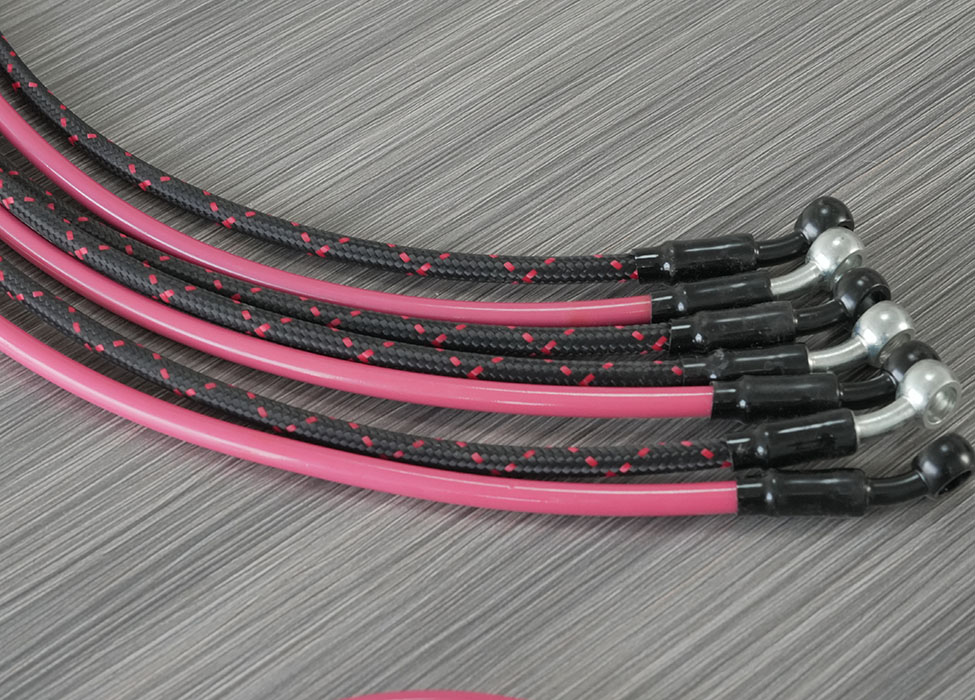
For complete assemblies, a PTFE Brake Line Assembly can be configured with the required fittings and hose length.
Brake Hose Problem 5: The Outer Cover Is Damaged
Common Causes
- Continuous rubbing
- Contact with sharp edges
- Heat exposure
- Road debris
- Incorrect routing
- Improper installation
Does Outer Damage Always Mean the Hose Must Be Replaced?
The answer depends on the severity and construction of the hose. If reinforcement or the pressure-containing structure has been compromised, the assembly should be replaced.
Brake hose inspection should focus on structural condition rather than appearance alone.
Brake Hose Problem 6: Corrosion Around the Connection
Why Environmental Conditions Matter
Humidity, rain, road salt and coastal environments can accelerate corrosion of exposed metal components.
This is particularly relevant for motorcycles operating in tropical or coastal regions where moisture exposure is frequent.
What Should a Buyer Check?
- Fitting material
- Surface treatment
- Corrosion resistance requirements
- Sealing method
- Storage and packaging conditions
Brake Hose Problem 7: The Hose Has Been Twisted
A hose assembly should be installed in its intended orientation. Twisting the hose body to force a fitting into position can create unnecessary mechanical stress.
How to Avoid Twisting
Confirm the fitting angle before ordering or manufacturing the hose. For modified motorcycles, provide the required fitting orientation together with the hose length.
This is particularly important for custom Motorcycle Brake Lines.
Choosing Between Different Brake Hose Materials
Teflon Brake Hose
Teflon Brake Hose is based on a PTFE inner tube construction and can be selected where the application requires suitable chemical and temperature resistance.
Nylon Brake Hose
Nylon Brake Hose is another construction option for applications where flexibility, weight and material compatibility need to be considered.
Nylon Brake Hose Assembly
For customers who require a finished component rather than loose tubing, a Nylon Brake Hose Assembly can combine the selected hose with the required fittings.
Rubber Brake Hose Assembly
For conventional replacement requirements, a Rubber Brake Hose Assembly remains an option where the material and assembly specifications match the motorcycle application.
Motorcycle Brake Hose Maintenance Checklist
Monthly or Routine Inspection
- Check for cracks
- Check for swelling
- Check for fluid leakage
- Inspect fitting areas
- Look for abrasion
- Check hose routing
- Check tire and wheel clearance
- Inspect after motorcycle modifications
After Installing a New Brake Hose
Confirm that the fittings are correctly installed, the hydraulic system has been properly bled and the hose has sufficient clearance throughout steering and suspension movement.
A final leakage inspection should be completed before normal use.
Brake Hose Buying Guide for Motorcycle Parts Importers
Do Not Buy Based on Hose Color Alone
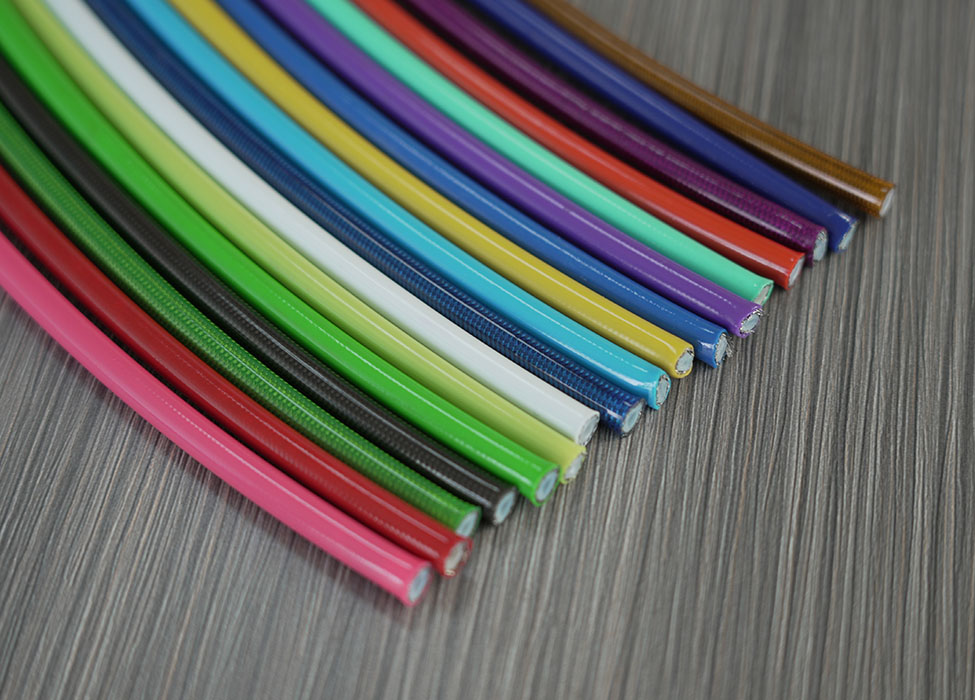
Color can be important for motorcycle customization, but it should not replace technical specifications.
Ask for Technical Information
When purchasing brake hoses from an overseas manufacturer, ask for information about hose construction, inner tube material, reinforcement, fittings, dimensions and applicable pressure or temperature requirements.
Samples Are Useful for New Projects
For distributors developing their own motorcycle brake line kits, sending an existing hose or drawing can reduce communication errors during sample development.
Frequently Asked Questions
Why is my motorcycle brake hose leaking?
Possible causes include damaged sealing washers, fitting problems, hose damage, corrosion or incorrect installation. The exact leakage point should be identified before deciding on the repair.
Why does my motorcycle brake lever feel soft after changing the hose?
Air may have entered the hydraulic system during replacement. The system may require proper bleeding. Other components should also be inspected if the problem continues.
Can braided brake lines solve a soft brake lever?
A braided construction can reduce hose expansion compared with some conventional hoses, but it cannot correct air in the hydraulic system, a defective master cylinder or a damaged caliper.
How often should motorcycle brake hoses be inspected?
Brake hoses should be checked during routine motorcycle maintenance and whenever the braking system or motorcycle geometry is modified.
Can you manufacture brake hoses according to a drawing?
For OEM and customized projects, a technical drawing can be used to define hose length, fitting configuration, fitting angle and other requirements. A physical sample can also be useful for product development.
Custom Motorcycle Brake Hose Manufacturing
Our brake hose manufacturing service supports customized hose lengths, fitting configurations and different hose constructions for motorcycle and other vehicle applications.
If you are a motorcycle parts importer, distributor, workshop or OEM buyer, send us your drawing, sample or technical requirements.
Contact our factory for OEM motorcycle brake hose production.