

Common Motorcycle Brake Hose Problems and Solutions: A Complete Guide to Brake Line Upgrades
Motorcycle brake hoses play a critical role in hydraulic braking systems. They transfer brake fluid pressure from the master cylinder to the brake caliper, helping the rider control braking force. Over time, exposure to heat, moisture, road debris, vibration, and repeated braking can affect brake hose condition and performance.
Understanding common motorcycle brake hose problems helps motorcycle owners, repair shops, distributors, and aftermarket parts buyers identify potential issues and select suitable replacement components. For businesses supplying motorcycle parts in Southeast Asia, the Middle East, Japan, South Korea, and Africa, choosing reliable motorcycle brake lines is also important for product quality, fitment, and long-term customer satisfaction.
This guide explains common motorcycle brake hose problems, their possible causes, practical solutions, and the key considerations when choosing replacement or upgraded brake hoses.
1. Common Motorcycle Brake Hose Problems
1.1 Brake Hose Cracking and Surface Aging
Rubber brake hoses can deteriorate as they age. Continuous exposure to sunlight, high temperatures, road contaminants, and environmental conditions may contribute to surface cracking, hardening, or other signs of deterioration.
Common Symptoms
- Visible cracks or splits on the outer hose surface.
- Rubber that appears hardened, swollen, or damaged.
- Signs of fluid leakage around the hose or connection points.
- Changes in brake lever feel that require professional inspection.
Possible Solutions
Inspect brake hoses regularly and replace any hose that shows damage, leakage, or other signs of deterioration. Follow the motorcycle manufacturer's replacement intervals and service procedures. When selecting replacement parts, verify the hose specifications, fitting type, length, and compatibility with the intended motorcycle model.
A properly specified Rubber Brake Hose Assembly can be a suitable replacement for applications designed around rubber hose construction. For riders and workshops considering an aftermarket upgrade, compare approved hose constructions and complete assembly specifications rather than choosing by appearance alone.
1.2 Brake Hose Expansion Under Pressure
Hydraulic braking systems rely on pressure being transmitted through brake fluid. If a hose expands excessively under pressure, some movement at the brake lever may be absorbed by the hose rather than contributing to the intended hydraulic response. Hose construction, condition, operating pressure, and system design all affect performance.
Common Symptoms
- A brake lever that feels softer than expected.
- Reduced consistency in brake lever feel.
- Noticeable changes in braking response that require diagnosis.
Possible Solutions
First, check for air in the hydraulic system, fluid leakage, worn components, and other potential faults. A soft brake lever does not automatically mean the hose is defective. Have the complete braking system inspected before deciding which parts need replacement.
For compatible motorcycles, a properly engineered Teflon Brake Hose with suitable reinforcement may be an option when selecting an aftermarket brake hose. Reinforced hose construction can help control expansion when the complete assembly is designed and tested for the required operating conditions. Actual performance depends on the hose design, fittings, manufacturing quality, and application.
1.3 Brake Fluid Leakage Around Hose Fittings
Brake fluid leakage is a serious warning sign. Leaks can occur around fittings, sealing washers, connection interfaces, or a damaged hose. Incorrect installation, incompatible components, damaged sealing surfaces, and unsuitable fittings may contribute to leakage.
Common Symptoms
- Wet areas or brake fluid residue around hose connections.
- A falling brake fluid level without an obvious explanation.
- Visible damage, corrosion, or deformation around fittings.
- A brake lever that loses pressure or does not operate normally.
Possible Solutions
Stop riding the motorcycle if a brake fluid leak is suspected. Do not rely on tightening a fitting without identifying the cause. Have a qualified technician inspect the hose, fittings, seals, and mating surfaces, then replace damaged or incompatible components using the specified installation procedure.
When sourcing replacement assemblies, confirm fitting angles, thread specifications, sealing methods, hose length, and compatibility with the motorcycle's braking system. A complete PTFE Brake Line Assembly may be suitable for applications requiring a PTFE inner tube, but the assembly must use compatible fittings and meet the relevant pressure and performance requirements.
1.4 Corrosion of Brake Hose Fittings
Brake hose fittings can be exposed to rain, humidity, road salt, cleaning chemicals, and other corrosive conditions. Corrosion may damage the fitting surface, complicate maintenance, and compromise the integrity of a connection.
Environmental conditions vary across markets. Coastal areas in Southeast Asia, humid regions, dusty roads, and locations where vehicles encounter frequent temperature changes can all create different maintenance challenges.
Possible Solutions
- Inspect fittings and connection points for rust, pitting, and visible damage.
- Replace components that are corroded or no longer suitable for service.
- Choose fitting materials and surface finishes appropriate for the application.
- Follow the manufacturer's cleaning, inspection, and maintenance instructions.
For aftermarket distributors and motorcycle parts manufacturers, fitting material, surface treatment, thread accuracy, and assembly consistency should be considered together. Stainless steel braided reinforcement may offer mechanical reinforcement and abrasion protection when properly designed, but the braid does not automatically make every fitting corrosion-proof. Material selection and the complete assembly design remain important.
1.5 Brake Hose Routing Problems
Incorrect brake hose routing can cause rubbing, twisting, excessive bending, or tension when the handlebars turn or the suspension moves. These problems can accelerate wear and may interfere with braking system operation.
How to Identify Routing Issues
- The hose rubs against the tire, fork, frame, or another component.
- The hose becomes stretched when the handlebars reach full lock.
- The hose is twisted or bent more tightly than permitted.
- The hose contacts moving parts during suspension travel.
Recommended Solutions
Check the routing against the motorcycle manufacturer's specifications. Verify clearance at full steering lock and throughout the specified suspension movement. Use the correct hose length, fitting orientation, clips, and guides. Avoid sharp bends and twisting during installation.
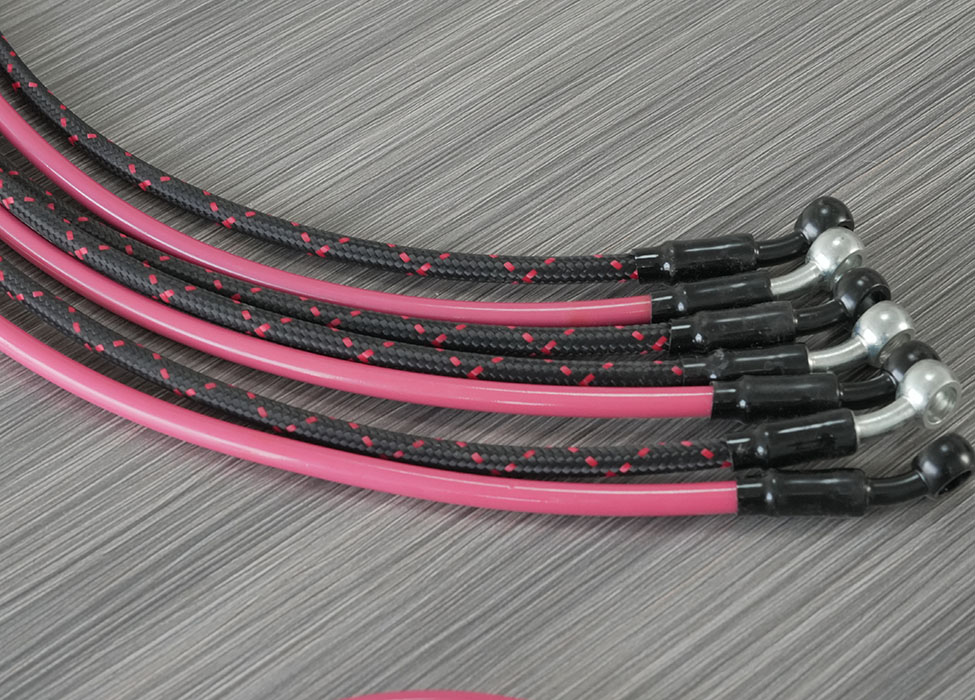
For custom motorcycles and modified braking systems, correctly specified Motorcycle Brake Lines can help meet application-specific routing and fitment requirements. Custom length and fitting configurations should be confirmed against the actual motorcycle and checked by a qualified installer before the vehicle is returned to service.
1.6 Incorrect Brake Hose Material Selection
Not every motorcycle requires the same brake hose construction. Material selection depends on the original equipment requirements, working pressure, temperature range, brake fluid compatibility, routing, intended use, and applicable regulations.
Common options include rubber brake hoses, PTFE-inner-tube hoses with suitable reinforcement, and certain nylon tubing products intended for compatible applications. These products are not interchangeable in every hydraulic braking system.
How to Choose the Right Material
- Rubber brake hose: Consider a properly specified rubber assembly for applications designed around that hose construction.
- PTFE or Teflon brake hose: Consider a qualified assembly when PTFE chemical compatibility and reinforced construction meet the application requirements.
- Nylon tubing: Verify that the exact tubing product is specifically approved for the intended brake system. General-purpose nylon tubing must not be substituted for a brake hose without documented suitability.
For purchasing teams, comparing the full assembly specification is more useful than comparing material names alone. Confirm pressure ratings, temperature limits, fitting compatibility, dimensional tolerances, applicable test results, and vehicle fitment before ordering.
2. Why Consider Upgrading Motorcycle Brake Hoses?
A brake hose upgrade may be appropriate when the original hose is damaged, when an application requires a different approved configuration, or when a compatible aftermarket assembly is needed for a modified motorcycle. The benefits depend on the product specification and the condition of the existing braking system.
2.1 More Consistent Brake Lever Feel
A properly engineered reinforced brake hose can help control hose expansion under pressure. In a compatible system, this may contribute to more consistent brake lever feel. However, hose replacement cannot compensate for air in the system, worn brake components, incorrect fluid, or poor maintenance.
2.2 Better Suitability for Modified Motorcycles
Modified motorcycles may require different hose lengths, fitting angles, or routing configurations. Custom-made brake line assemblies can help address these requirements when the design is based on accurate vehicle measurements and verified compatibility.
2.3 Flexible Material and Construction Options
Depending on the application, buyers may compare rubber hose assemblies, PTFE-inner-tube designs, reinforcement layers, protective outer coverings, and fitting materials. Selecting the right combination can help manufacturers and distributors serve different motorcycle models and market requirements.
For motorcycle parts distributors and OEM buyers, options such as Teflon Brake Hose, Nylon Brake Hose, PTFE Brake Line Assembly, Nylon Brake Hose Assembly, and Rubber Brake Hose Assembly should be evaluated according to their intended applications and verified specifications. Nylon products in particular must be confirmed as suitable for the intended braking system before use.
2.4 Potential Advantages of Stainless Steel Braided Brake Hoses
Stainless steel braided reinforcement can provide additional mechanical support and help protect the inner hose against certain forms of external damage. When the assembly is properly designed and manufactured, it can be a useful option for suitable aftermarket applications.
Buyers should still verify corrosion resistance, braid coverage, end-fitting quality, pressure performance, abrasion protection, and applicable safety requirements. A stainless steel braid alone does not establish that a brake hose assembly is suitable for every motorcycle.
3. How to Maintain Motorcycle Brake Hoses
3.1 Inspect Brake Hoses Regularly
Inspect the full hose length, outer covering, fittings, and connection points according to the manufacturer's maintenance schedule. Look for cracks, swelling, leakage, abrasion, kinks, and corrosion. Replace any component that fails inspection.
3.2 Use the Correct Brake Fluid
Always use the brake fluid type specified by the motorcycle manufacturer. Do not assume that all brake fluids are interchangeable. Incorrect fluid selection can damage seals or affect system performance.
3.3 Check Fitment After Installation
After replacing a hose, a qualified technician should verify fitting security, hose routing, steering clearance, and suspension clearance. The hydraulic system must be filled and bled using the prescribed procedure, followed by the required leak and functional checks before the motorcycle is used.
3.4 Replace Damaged Hoses Promptly
Do not wait for a damaged brake hose to fail completely. A leaking, cracked, bulging, or severely abraded hose requires immediate attention. Because brake hoses are safety-critical components, replacement and testing should follow the vehicle manufacturer's instructions and applicable regulations.
4. What Should Motorcycle Brake Hose Buyers Check Before Ordering?
For importers, wholesalers, motorcycle parts distributors, repair networks, and OEM buyers, checking specifications before placing an order can reduce fitment issues and unnecessary returns.
4.1 Confirm Technical Specifications
- Motorcycle make, model, year, and intended application.
- Required hose length and internal construction.
- Fitting thread, angle, material, and connection type.
- Specified working pressure and temperature range.
- Brake fluid compatibility and relevant test documentation.
- Applicable vehicle, market, and regulatory requirements.
4.2 Evaluate Manufacturing and Quality Control
When comparing brake hose suppliers, ask about incoming material inspection, hose production processes, fitting crimping controls, dimensional inspection, pressure testing, traceability, and final assembly inspection. Request test documentation relevant to the product and intended market rather than relying on general quality claims.
4.3 Consider Customization Requirements
For distributors serving multiple motorcycle models, customization may involve hose length, fitting configuration, protective covering, packaging, labeling, and product identification. These requirements should be confirmed before production, with samples and fitment checks where appropriate.
5. Frequently Asked Questions About Motorcycle Brake Hoses
How often should motorcycle brake hoses be replaced?
Replacement intervals vary by motorcycle model, hose type, service conditions, and manufacturer recommendations. Follow the vehicle maintenance schedule and replace hoses immediately if they show leakage, cracking, swelling, or other damage.
Are braided motorcycle brake hoses better than standard rubber hoses?
Not in every situation. A properly engineered braided hose may help control expansion and provide useful reinforcement, but overall suitability depends on construction, fittings, testing, compatibility, and correct installation. A compliant rubber assembly remains appropriate for applications designed for that specification.
Can I install a longer brake hose on a modified motorcycle?
A different hose length may be required after handlebar, fork, or other modifications. The selected hose must maintain suitable clearance and bend radius throughout steering and suspension movement. Have the installation checked by a qualified technician.
Can nylon tubing be used as a motorcycle brake hose?
Only when the specific product is designed, tested, and approved for the intended braking application. General-purpose nylon tubing should not be used as a substitute for a hydraulic brake hose simply because its dimensions appear suitable.
What should importers look for in a motorcycle brake hose manufacturer?
Importers should evaluate product specifications, material traceability, manufacturing consistency, crimping quality, testing procedures, fitment support, customization capability, and the documentation required in their destination market.
6. Conclusion: Choose the Right Motorcycle Brake Hose for Reliable Performance
Common motorcycle brake hose problems include surface deterioration, excessive expansion, fluid leakage, fitting corrosion, incorrect routing, and unsuitable material selection. Regular inspection, correct installation, compatible replacement parts, and proper maintenance are essential for safe braking system operation.
For motorcycle parts distributors, aftermarket brands, and OEM purchasing teams, a reliable brake hose solution starts with verified specifications and consistent manufacturing quality. Whether selecting a rubber assembly or a reinforced PTFE-inner-tube design, buyers should prioritize application compatibility, documented performance, fitting accuracy, and compliance with relevant requirements.
Before ordering motorcycle brake lines in bulk, confirm the intended vehicle models, dimensions, connection details, quality requirements, and destination-market regulations. Choosing the right assembly helps reduce fitment problems and supports long-term product reliability.