+8618903185773


+8618903185773

Motorcycle Brake Hose Upgrade: Why Should You Replace Your Brake Line?
Motorcycle brake hoses are small components, but they have an important role in the hydraulic braking system. For daily motorcycles, scooters, modified motorcycles and high-performance applications, the condition of the brake hose can directly affect hydraulic pressure transmission, brake lever feel and system reliability.
Many motorcycle owners only consider replacing a brake hose after they notice leakage, cracking or a soft brake lever. For modified motorcycles and performance applications, however, brake hose selection should be considered earlier. The hose material, reinforcement structure, fittings, routing and installation all need to match the application.
A standard rubber brake hose is suitable for many original motorcycle applications. However, motorcycle modifications, aggressive riding, racing applications, off-road use and long-term exposure to heat, moisture and vibration can create different requirements.
A properly designed upgraded brake line can provide a more controlled hose construction and better resistance to expansion, abrasion and environmental conditions, depending on the material and reinforcement selected.
Hydraulic brake systems depend on efficient transmission of brake fluid pressure. If a flexible hose expands excessively under pressure, part of the system movement can be absorbed by the hose itself.
A reinforced brake hose construction can help control this expansion. This is one reason stainless steel braided brake lines are widely used in motorcycle modification and performance applications.
Modified motorcycles may use different handlebars, master cylinders, calipers, suspension components or routing configurations compared with the original motorcycle.
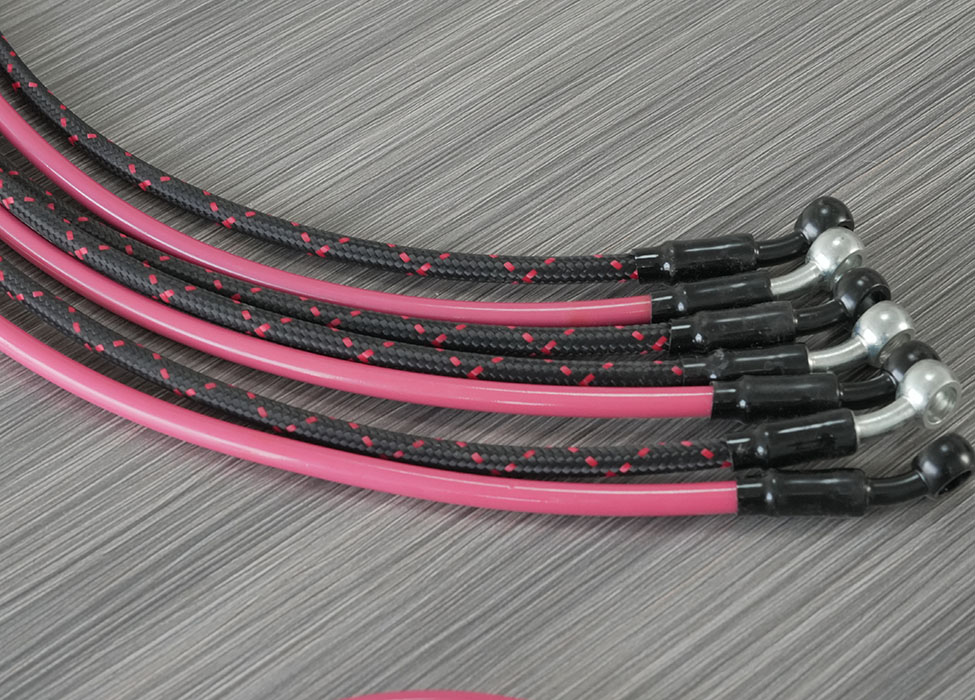
In these applications, an OEM replacement hose is not always the most convenient solution. A custom motorcycle brake line can be manufactured according to hose length, fitting type, thread specification, fitting angle and orientation.
Different motorcycle applications require different hose constructions. Rubber, nylon and PTFE-based hoses each have their own characteristics.
For example, can be considered when chemical resistance and temperature performance are important requirements.
For applications requiring a lightweight flexible construction, can also be evaluated according to the required pressure, temperature and installation conditions.
Brake hoses should be inspected regularly rather than replaced only after a visible failure occurs. The following conditions are common reasons to inspect or replace a motorcycle brake hose.
A brake hose that visibly bulges when hydraulic pressure is applied should not be ignored. Bulging can indicate deterioration or weakness in the hose structure.
Motorcycle inspection guidance specifically identifies brake hose bulging under pressure as a brake-system defect, together with leakage, excessive deterioration, chafing, twisting and stretching.
Inspect the complete hose length, especially areas close to the steering head, fork, frame, caliper and other moving components.
Continuous contact with brackets or other motorcycle components can gradually damage the outer surface. A hose should also have sufficient freedom of movement without being stretched, twisted or kinked.
Any brake fluid leakage around the hose, fitting, banjo connection or crimped area requires immediate inspection. Do not assume that tightening a fitting will always solve the problem.
The actual cause can be incorrect fitting specifications, damaged sealing washers, unsuitable thread combinations, poor assembly or hose damage.
A soft brake lever can have several causes, including air in the hydraulic system, contaminated brake fluid, caliper problems, master cylinder problems or hose-related issues.
Therefore, replacing the hose alone should not be treated as a guaranteed solution. The complete braking system should be inspected and properly bled after hose replacement.
The hose itself may look acceptable while corrosion develops around the ferrule or fitting area. For motorcycles used in humid, coastal or high-temperature environments, fitting material and surface treatment should be considered when selecting a brake hose.
Rubber brake hoses remain widely used for original equipment applications because they provide flexibility and are suitable for many standard motorcycle designs.
Stainless steel braided brake lines use a reinforcement layer around the inner hose construction. The purpose is to control hose expansion and provide a different mechanical construction from a conventional rubber hose.
For motorcycles being modified for performance, appearance or custom installation, solution can provide more options for hose construction, fitting configuration and external appearance.
A high-quality hose cannot compensate for an incorrect fitting.
When ordering custom motorcycle brake lines, buyers should confirm:
Thread diameter alone is not enough to confirm compatibility. The thread pitch, sealing method, fitting geometry and installation position should all be checked before production.
PTFE is commonly selected for applications where chemical resistance, temperature capability and low fluid permeability are important design considerations.
A properly constructed can be manufactured with different fitting configurations for motorcycle, automotive and specialty applications.
PTFE construction does not automatically make every brake line suitable for every motorcycle. The complete assembly, reinforcement, fittings, pressure rating and installation method must be matched to the application.
Nylon brake hose is another option for applications where flexibility, weight, dimensional requirements and material characteristics need to be balanced.
can be produced according to different hose lengths and fitting requirements.
Upgrading to a performance brake hose does not mean rubber hoses are unsuitable for all motorcycles. Standard rubber brake hose assemblies continue to be used in many OEM and replacement applications.
For buyers looking for a conventional flexible construction, can be selected according to the required hose specifications and fitting configuration.
OEM replacement brake hoses are normally designed around the original motorcycle configuration. Modified brake hoses are more focused on customized dimensions, fittings, appearance and application-specific requirements.
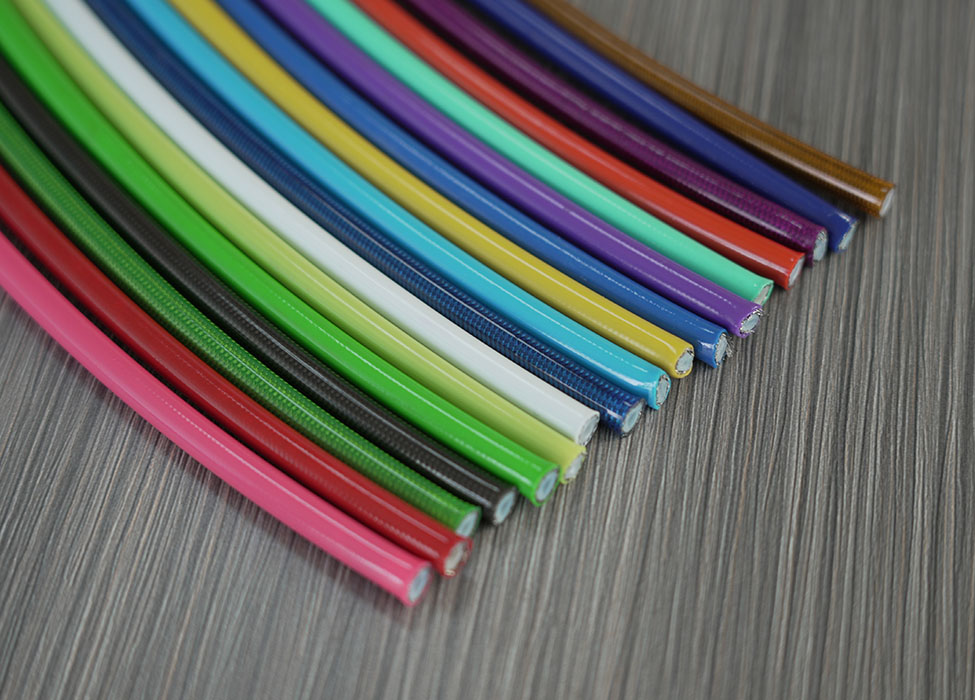
For distributors, motorcycle parts wholesalers and brake system suppliers, the ability to customize hose length, fitting angle, fitting type and external color can be important when developing different product specifications.
Before purchasing motorcycle brake lines in bulk, buyers should prepare the technical information required for production.
Provide the motorcycle model, year, front or rear brake application and whether the system is equipped with ABS. These details help the manufacturer understand the installation environment.
The finished hose should have enough length for steering and suspension movement without excessive slack. Routing should avoid sharp bends, moving parts, excessive heat and continuous abrasion.
Provide fitting drawings, samples or detailed dimensions whenever possible. Banjo angle, thread specification, sealing surface and orientation can all affect installation.
Depending on the application, buyers can evaluate rubber, nylon, PTFE or reinforced braided constructions. Material selection should be based on the actual pressure, temperature, chemical and mechanical requirements.
For wholesale and OEM projects, confirm minimum order quantity, samples, production tolerance, packaging, labeling, color requirements and inspection requirements before mass production.
Motorcycle parts importers, distributors and repair shops often need more than one standard specification. Different motorcycle models may require different lengths, fitting angles and thread configurations.
A manufacturer capable of producing custom motorcycle brake lines can support multiple specifications within one product category. This can make it easier for distributors to develop their own brake hose product range.
A simple inspection can help identify problems before they become more serious.
A motorcycle brake hose upgrade should be based on the actual application rather than appearance alone. For modified motorcycles, performance applications and custom builds, the advantages of reinforced or specialized brake hose constructions can include better control of hose expansion, more customization options and improved suitability for specific installation requirements.
The most important point is to select the complete brake hose assembly correctly. Hose material, reinforcement, fittings, thread specifications, length, routing and installation all need to work together.
For OEM, ODM and wholesale projects, providing a sample, drawing or detailed technical specification to the brake hose manufacturer is the most efficient way to develop the correct motorcycle brake line.
Next :
Common Motorcycle Brake Hose Problems Solutions: A Complete Guide to Brake Line UpgradesPrev :
How to Choose the Right Motorcycle Brake Hose: Materials, Fittings Buying GuideAntu Brake Line factory wholesale
 Hengshui City, Hebei, China.
 +8618903185773