

How to Choose the Right Motorcycle Brake Hose: Materials, Fittings and Buying Guide
Choosing a motorcycle brake hose is not simply a matter of selecting the right length and color. The hose construction, inner tube material, reinforcement, fitting configuration and installation environment all need to match the application.
This becomes more important when sourcing brake hoses for modified motorcycles, motorcycle parts distribution, OEM replacement kits or international aftermarket markets.
For importers and motorcycle parts buyers, understanding these technical details can make it easier to compare different brake hose suppliers and avoid compatibility problems.
What Is a Motorcycle Brake Hose?
A motorcycle brake hose is the flexible hydraulic connection between components such as the master cylinder and brake caliper or other parts of the braking circuit.
Unlike a rigid brake pipe, the hose must accommodate movement while maintaining hydraulic integrity.
Why Hose Construction Matters
The hose must withstand repeated pressure cycles while also handling bending, vibration, temperature changes and environmental exposure.
This is why the inner tube, reinforcement layer and fittings should be considered as one complete assembly.
1. Select the Correct Inner Tube Material
Teflon Brake Hose
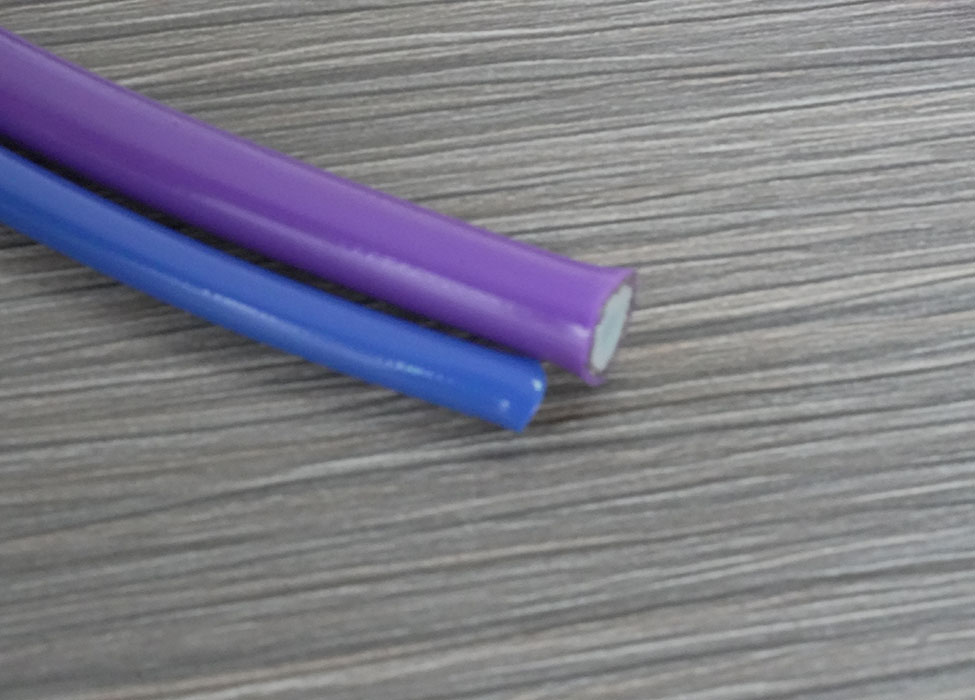
A Teflon Brake Hose uses a PTFE inner tube. PTFE is commonly selected for applications where chemical resistance and temperature performance are important.
For motorcycle applications, the complete hose assembly should still be evaluated, including reinforcement, fittings, crimping and installation requirements.
Nylon Brake Hose
Nylon Brake Hose can be considered where a lightweight and flexible construction is required and the material is compatible with the intended application.
Material selection should always be based on technical requirements rather than choosing a product solely because it is marketed as a performance hose.
2. Select the Correct Reinforcement
The reinforcement layer helps the hose withstand internal pressure and mechanical loads.
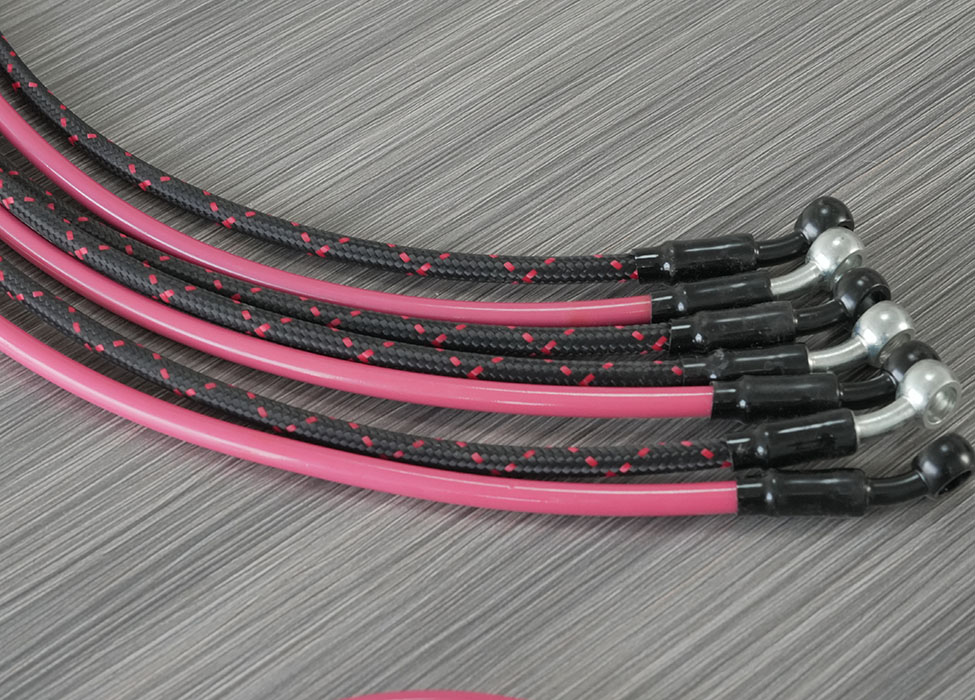
Braided Brake Line Construction
Stainless steel braided construction is commonly used in performance-oriented brake hose applications because the reinforcement can provide greater resistance to expansion than some conventional hose constructions.
However, braid material alone does not determine the performance of the complete brake line. The inner tube, braid structure, outer coating, fittings and crimping process all matter.
What Buyers Should Ask the Supplier
- What is the inner tube material?
- What reinforcement is used?
- What fitting materials are available?
- What hose dimensions are available?
- Can the hose length be customized?
- Can fitting angles be customized?
- What outer protection options are available?
3. Check the Brake Hose Fittings
Thread Specification
Brake hose fittings should match the braking system. Similar-looking fittings may have different thread specifications, so visual comparison alone is not sufficient.
Banjo Angle
Banjo angle is especially important on motorcycles because the hose often needs to follow a restricted routing path.
Fitting Orientation
The orientation of both ends should be confirmed before production. Incorrect orientation can make installation difficult or force the hose into an unsuitable position.
4. Choose the Correct Hose Length
The correct length should allow normal steering and suspension movement without excessive slack.
Why Original Length Is Not Always the Right Length
Modified motorcycles may use different handlebars, forks, calipers or suspension components. In these cases, the original hose length may no longer be suitable.
For custom Motorcycle Brake Lines, provide the actual required routing and fitting position rather than simply ordering the original factory length.
5. Consider the Operating Environment
Tropical and Humid Markets
In Southeast Asian markets, motorcycles may be exposed to frequent rain, high humidity and road contamination. Hose protection and fitting corrosion resistance should therefore be considered during product selection.
Hot and Dry Markets
Motorcycles operating in Middle Eastern climates may experience high ambient temperatures and strong sunlight. The hose construction should be selected according to the expected temperature and application requirements.
Japan and Korea
Different motorcycle models, aftermarket modification standards and seasonal conditions may influence hose selection. Accurate vehicle application data is especially important when supplying replacement or customized brake line kits.
African Markets
Road conditions can vary considerably between applications. For motorcycles used in rough-road or high-mileage environments, hose routing, abrasion resistance and fitting durability deserve particular attention.
6. Choose Between a Hose and a Complete Assembly
Loose Brake Hose
Loose hose material can be useful for manufacturers or workshops that already have their own fitting and assembly processes.
Complete Brake Hose Assembly
For distributors and motorcycle parts buyers, a complete assembly can simplify purchasing because the hose, fittings and connection configuration are supplied as one finished component.
A PTFE Brake Line Assembly is one option for customers requiring a complete PTFE-based brake line.
For other applications, a Nylon Brake Hose Assembly can be supplied according to the required specifications.
7. Rubber Brake Hose Assembly for Conventional Applications
Not every motorcycle requires a braided or PTFE-based hose.
For conventional replacement applications, a Rubber Brake Hose Assembly can be appropriate when its construction, dimensions and fittings match the original application.
The correct product depends on the motorcycle and operating requirements rather than whether a hose is marketed as standard or upgraded.
8. What Makes a Good Motorcycle Brake Hose Supplier?
Manufacturing Consistency
For B2B buyers, one sample that works correctly is not enough. The supplier should be able to maintain consistent dimensions, fittings, hose construction and assembly quality across production batches.
Customization Capability
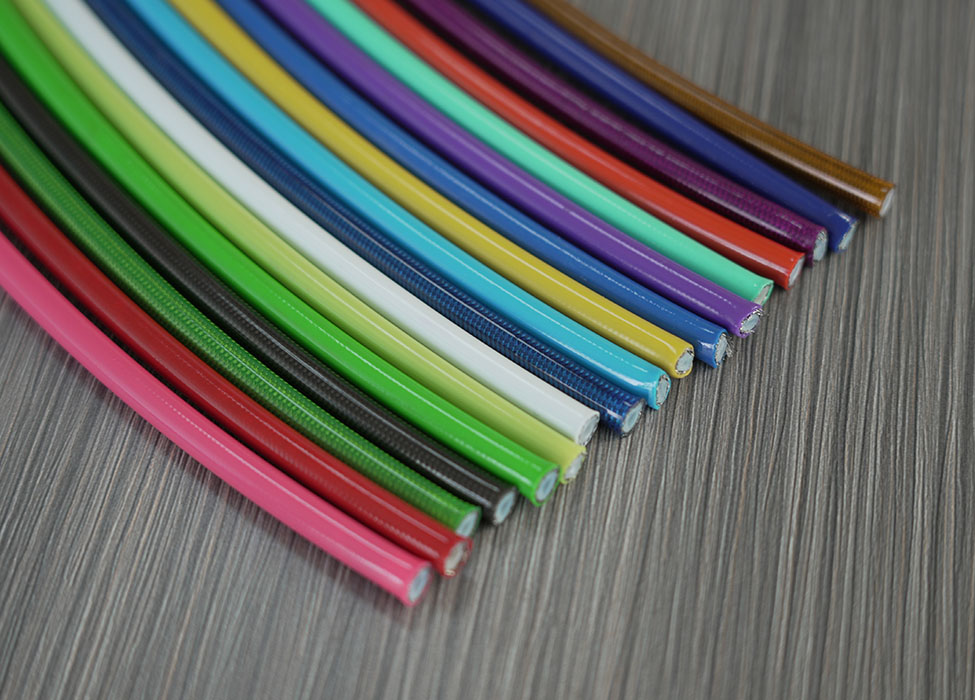
A manufacturer supporting custom hose lengths, fitting angles, colors and configurations can be useful for motorcycle aftermarket distributors developing their own brake line kits.
Technical Communication
A supplier should be able to understand drawings, samples, fitting specifications and application requirements.
Useful information to provide when requesting a quotation
- Motorcycle model or application
- Required hose length
- Hose material
- Fitting type
- Thread specification
- Fitting angle
- Hose color
- Quantity
- Packaging requirements
- Sample or technical drawing
Motorcycle Brake Hose Maintenance After Installation
Inspect the Hose Regularly
Check for cuts, swelling, pinching, abrasion and fluid leakage during routine maintenance. Motorcycle maintenance guidance also recommends inspecting the full length of brake hoses for cuts, swelling and pinching. :contentReference[oaicite:4]{index=4}
Check Hose Routing
After any motorcycle modification, inspect the hose routing again. The hose should have sufficient clearance from the tire, wheel, fork, frame and exhaust.
Inspect the Fittings
Look for corrosion, leakage or visible damage around connection points.
Frequently Asked Questions About Motorcycle Brake Hoses
How often should a motorcycle brake hose be replaced?
There is no universal replacement interval for every motorcycle. Inspect the hose condition regularly and follow the motorcycle manufacturer's maintenance recommendations. Replace the hose when damage, leakage, cracking, swelling or other significant deterioration is found.
Does upgrading to a braided brake hose improve safety?
A properly designed braided brake hose can provide greater resistance to expansion than some conventional hose constructions. However, braking safety depends on the entire hydraulic and mechanical braking system and correct installation.
Is a PTFE brake hose suitable for every motorcycle?
No. Material selection should consider the motorcycle, brake fluid, temperature, pressure, flexibility, reinforcement and fitting requirements.
Is nylon brake hose suitable for motorcycle applications?
Nylon can be suitable for applications where its material properties meet the required pressure, temperature, flexibility and fluid compatibility requirements.
Can you manufacture motorcycle brake hoses according to a drawing?
For custom and OEM projects, a drawing can define hose length, fitting type, fitting angle, thread specification and other dimensions. A physical sample can also be supplied for reference.
Can I order different colors of motorcycle brake hose?
Depending on the hose construction and production requirements, different outer colors or protective coatings may be available. Color requirements should be confirmed before production.
Custom Motorcycle Brake Hose and Brake Line Manufacturing
We manufacture different brake hose constructions for motorcycle, automotive and other vehicle applications. Depending on the project, available solutions can include PTFE-based hose, nylon hose, rubber hose and reinforced motorcycle brake line assemblies.
OEM buyers, distributors and motorcycle parts wholesalers can provide a drawing, sample, hose dimensions or fitting information for technical evaluation.
Contact our brake hose factory for OEM, ODM and custom brake line projects.
Final Checklist for Motorcycle Brake Hose Buyers
- Confirm the vehicle application.
- Confirm hose length.
- Confirm inner tube material.
- Confirm reinforcement construction.
- Check fitting type and thread.
- Check fitting angle and orientation.
- Consider the operating temperature.
- Consider humidity, road conditions and abrasion exposure.
- Request a sample for new applications.
- Confirm production consistency before bulk ordering.
The best brake hose specification is the one that matches the actual motorcycle and operating conditions. For aftermarket and OEM projects, accurate technical information at the beginning of the project makes product development, production and installation much easier.